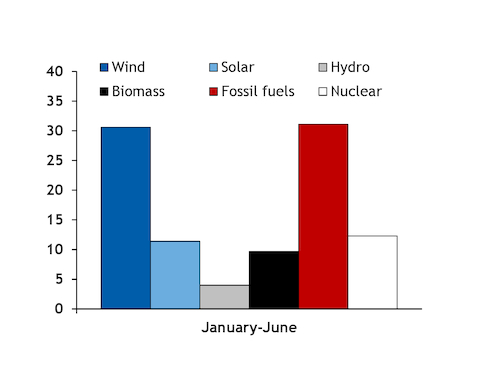
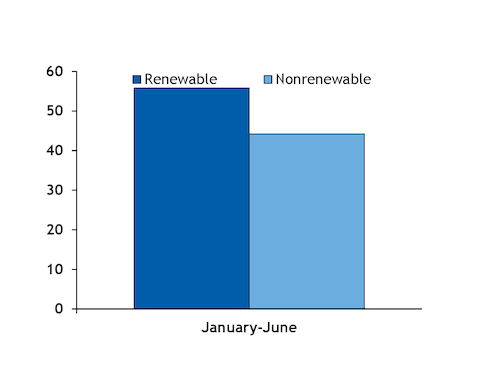
Renewable power sources accounted for 55.8pc of the German generation mix in the first half of this year, up significantly from 40.8pc for the whole of 2019 (see chart).
Output from wind, solar, hydropower and biomass plants totalled 136.4TWh in January-June, compared with 76.19TWh from fossil fuel-fired facilities, data from research institute Fraunhofer ISE show. These data include power plants with capacity of below 100MW, as well as embedded renewable sites. Overall, non-renewable sites — including nuclear — produced a total of 108.10TWh and accounted for 44.2pc of the generation mix.
Wind generation contributed the highest share at 30.6pc, followed by lignite-fired generation with 13.7pc and nuclear with 12.3pc (see chart).
Coal and lignite-fired generation fell on the year, hitting new lows. But gas-fired output increased to 28.06TWh, from 24.55TWh in the first half of 2019, supported by fuel switching from coal and lignite to gas.
As well as record renewables output, factors weighing on power-sector fossil fuel use included lower power demand — particularly in the second quarter, because of Covid-19. German power demand fell by 5.9pc on the year to 53.63GW in January-June, according to data from European transmission system operator association Entso-e.