Cutting methane leaks and routine flaring could unlock significant volumes of gas to alleviate pressure on a tight global LNG balance, according to the International Energy Agency's (IEA) methane tracker published on Monday.
The effective closure of the strait of Hormuz since 28 February has shut in around a fifth of the world's LNG supply, with the IEA estimating 110bn m³ of gas passing through the waterway in 2025. But the agency suggests that roughly double the amount of gas trapped in the Mideast Gulf could be replaced by cutting methane emissions, which has the potential to relieve pressure on the tight global LNG market.
The organisation indicates that large volumes of gas output are being wasted because of methane leaks, flaring and venting from oil and gas operations. And it estimates that around 100bn m³ of gas could be made available through a global effort to cut methane emissions from oil and gas operations, as well as an additional 100bn m³ through the elimination of non-emergency flaring.
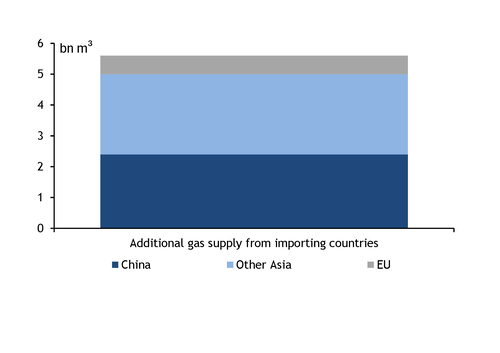
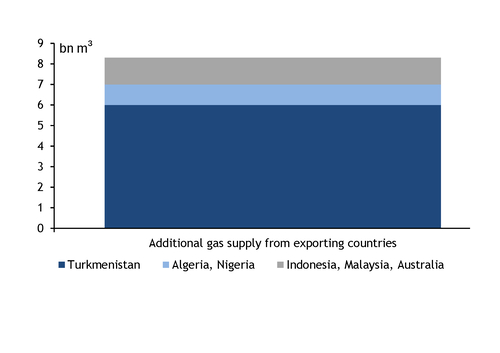
Deployment of infrastructure to achieve such large cuts would take time, but the IEA said that immediate measures across global upstream and downstream operations could relieve gas markets by nearly 15bn m³ in the short term. The report identifies the primary exporting countries with scope to create additional gas supply as Turkmenistan, Algeria and Nigeria, while Asia is the main importing region where gas losses could be prevented (see graphs).
The agency also projects that around 30pc of all methane emissions tied to fossil fuels — more than 35mn t/yr — could be removed at no net cost, based on average energy prices in 2025. Required capital for abatement is lower than the market value of the gas captured to be sold or used, the IEA said. And the gap could grow as a result of the rise in prices cause by the war in the Middle East, according to the organisation.
No sign of progress
The IEA found that methane emissions tied to fossil fuels edged up on the year in 2025, indicating no progress towards targets.
Output from the fossil fuel sector — including oil, natural gas, coal and bioenergy — reach record highs in 2025 and methane emissions from these activities totalled 124mn t. This is up from roughly 120mn t in 2024.
Oil production emitted the highest volume of methane at around 45mn t, coal closely following with 43mn t while emissions from gas output were 36mn t.
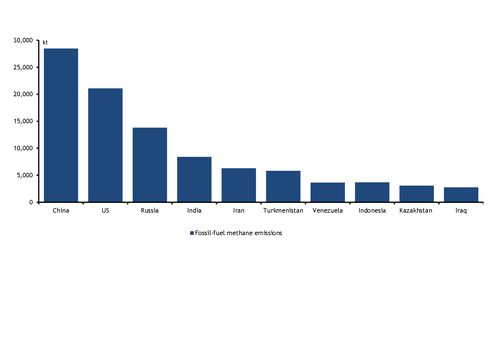
And around 70pc of fossil-fuel methane emissions came from only 10 countries, with China, the US and Russia the leading emitters (see graph).
Existing policies and regulations for global abatement will only cut energy-sector methane emissions by 20pc by 2030 and 26pc by 2035. This is short of the global methane pledge reduction target of a 30pc cut by 2030.