Adds detail throughout.
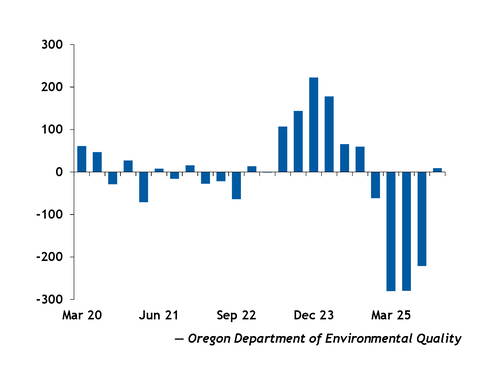
Recovering renewable diesel (RD) use in the fourth quarter snapped a streak of sinking Oregon Clean Fuels Program credit generation, according to the latest state data.
New credits generated during the quarter exceeded new deficits by 1.5pc, according to the Oregon Department of Environmental Quality. It was the first period of surplus credit generation following four consecutive quarters of new deficits exceeding new credits.
Renewable diesel use surged to its highest volume since early 2024, more than offsetting falling use of ethanol and biodiesel during the quarter. New deficits, meanwhile, sank as petroleum diesel use fell and gasoline use was roughly flat compared with the same period of 2024.
Low Carbon Fuel Standard (LCFS) programs like Oregon's require yearly reductions of road fuel carbon intensity. Suppliers must offset higher-carbon fuels with credits generated from distributing approved, lower-carbon alternatives to the market. California, Washington and New Mexico all administer LCFS programs in the US. British Columbia enforces a provincial LCFS in addition to a newer, federal Canadian Clean Fuel Regulations program.
Credits under the program do not expire and so may be banked for future years with tougher targets. Oregon's inventory of such credits fell by more than half over the year, to 608,000t. The larger California program, where surging credit production since 2020 has weighed on prices, reported more than 39mn t of credits available for future compliance at the end of 2025.
Oregon spot prices soared last summer after the state reported new deficits in the final months of 2024 had exceeded new credits by the largest volume in more than two years. Credits continued to fall short through 2025, and the spot price for the program sustained a premium of at least $50/credit to the larger California LCFS since July.
Uncertain and changing federal biofuel incentives weighed on Oregon low-carbon supplies last year. A shift in tax credits to emphasize US production, rather than supply, coupled with similar changes contemplated for federal blending mandates, cut support for importing biofuels to the market.
The higher state credit prices helped lure those supplies back. Renewable diesel made up roughly 25pc of the total liquid diesel pool in the fourth quarter, with physical volume growing by 62pc from the previous quarter and by 36pc from the fourth quarter of 2024. The fuel made up 47pc of all new credits generated for the period, a 14pc increase from the fourth quarter of the previous year.
Ethanol blended into gasoline made up 13pc of new credits for the quarter, a distant second. Biodiesel blending generated 11pc of all new credits, and non-metered electric vehicle charging rounded out the top five. Credit generation from such charging was higher by 19pc from the same quarter of 2024.
New deficit generation dropped during the quarter as renewable diesel elbowed back out its petroleum-based rival. Conventional diesel use generating deficits during the quarter fell by 27pc from the same quarter of 2024. Gasoline use was flat over the same period.