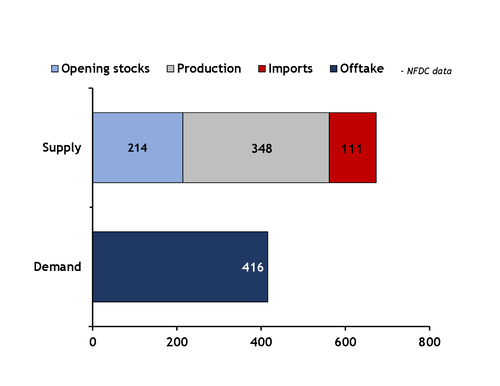
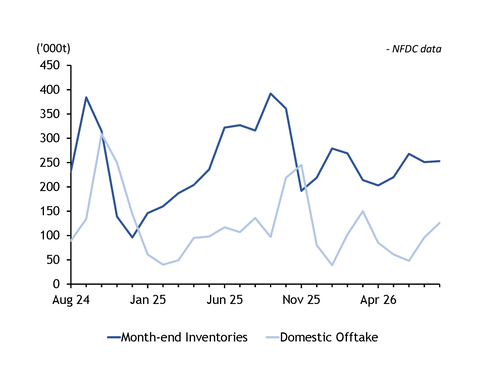
Pakistani DAP inventories edged up in August to 253,000t, with combined imports and domestic production slightly outpacing an uptick in demand. While stocks look fragile at the start of the October-March rabi season, a robust import line-up is likely to be enough to ensure offtakers are covered.
Pakistan imported 49,000t of DAP in August, just short of the five-year average for the month, according to NFDC data. Domestic output was at its highest since May 2024, at 79,000t.
Demand rose to 126,000t in August as farmers moved to cover potato season. Despite returning closer to long-term norms, this was still 14,000t short of the five-year average for August, as high prices continued to deter buyers.
DAP stocks began September at just over 250,000t, down from 316,000t last year. Importers expect 2026 offtake to be down by 20-30pc because of high global and domestic prices. And early hopes for a DAP subsidy to support wheat this quarter have fallen flat.
Even with a 20-30pc drop against the 2021-25 average for the quarter, DAP appetite in October-December could still be 415,000-474,000t.
Based on end-August inventories, 73,000t of NFDC-estimated September production and 125,000t of demand — as well as the 50,000t of DAP imports lined up in September according to Argus data — stocks at the start of October could edge down by 2,000t on the month to 251,000t.
While insufficient on its own to cover expected fourth-quarter demand, importers have lined up 177,000t of DAP for October, according to Argus data. With steady domestic production, this would be sufficient for Pakistan to end the year with robust carryover stocks, according to importers and traders.