The increased cost of shipping west African crude east could deter Asia-Pacific buyers, even as they seek to replace Russian grades, writes Sanjana Shivdas
Surging shipping costs, competitively priced Latin American crude and weak arbitrage economics are threatening to undermine demand for west African grades.
This combination of factors has resulted in an overhang of unsold Angolan cargoes still being available for February loading even after March trade has got under way. Four cargoes of February-loading Angolan crude were still searching for buyers as of 21 January — one each of Hungo, Clov, Girassol and Olombendo. And Angola plans to increase shipments in March, with 1.12mn b/d scheduled to be exported, the highest since October 2024 and up from 930,000 b/d scheduled for February.
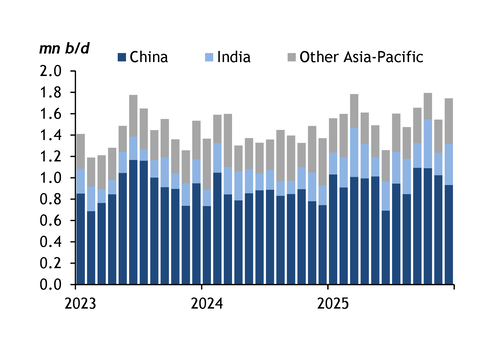
But demand from Chinese buyers could flag amid higher shipping costs from west Africa to Asia-Pacific. China is Angola's core market, taking around 55pc of Angolan flows last year, or roughly 580,000 b/d, and 540,000 b/d in 2024, according to trade and analytics firm Vortexa.
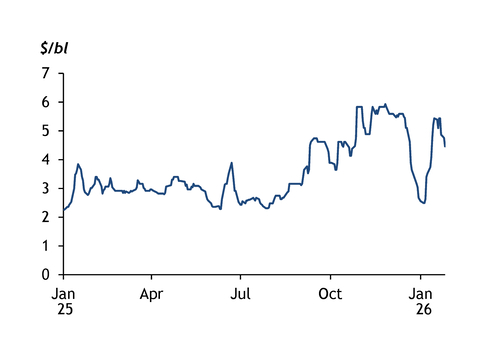
Freight rates to take a 2mn bl very large crude carrier-sized shipment from west Africa to China nearly doubled to $4.76/bl on 26 January from $2.56/bl at the start of the year, against a backdrop of increased bookings by Indian refiners to lift Mideast Gulf crude and firmer interest in taking Opec supplies.
West African crude also faces stiff competition from rival supplies in Latin America. The availability of cheaper alternatives, including Brazilian sweet grades and Guyanese crudes such as Golden Arrowhead, could lure away Chinese buyers, given the more appealing delivered prices of these competing streams.
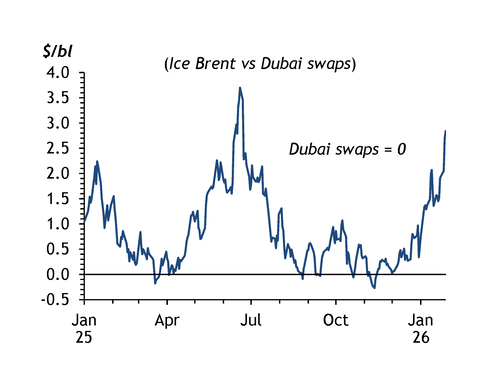
Arbitrage economics to take Atlantic basin crude east remain unfavourable. The front-month Brent-Dubai EFS — the premium of Ice Brent futures to Dubai swaps and a key measure of the west-east arbitrage — has averaged $1.55/bl in January, up from 38¢/bl last month and an average of 34¢/bl between September and November. A wider EFS makes North Sea Dated-linked crudes, including those from west Africa, less attractive to Asia-Pacific buyers.
Market backwardation could also curtail long-haul buying interest. Backwardation — with prompt prices at premiums to forward values — undermines long-haul arbitrage economics, because crude effectively loses value in transit.
Demand shift
Some support for Angolan crude has come from Indian buying interest as some refiners there have turned away from Russian crude or curtailed their purchases. A February cargo of Angolan Mostarda was sold to Indian private-sector refiner Reliance. The firm has not received any Russian crude at its 1.4mn b/d Jamnagar refinery since 20 December, the company says. India's state-run IOC bought Angolan Nemba and Clov for March arrival, as well as Nigerian Akpo condensate and Forcados in January, while fellow state-run refiner BPCL opted for Angolan Gindungo. Supplies of Angolan Mondo and Saturno found favour with China's Unipec for March delivery, while Indonesia's state-owned Pertamina bought March-arrival Nigerian Qua Iboe.
Demand for Nigerian crude picked up in early January, with stronger interest partly attributed to the knock-on effect of continued disruption to exports of Caspian CPC Blend. But easing refining margins and lower European run rates ahead of spring maintenance were expected to cool buyers' appetite.
West African crude shipments to Asia-Pacific last year rose by more than 180,000 b/d from a year earlier to 1.59mn b/d, thanks mainly to a 120,000 b/d rise in deliveries to China and a near 100,000 b/d increase in shipments to India (see graph). The rise was partly driven by sanctions on Russian crude, which prompted refiners to turn to non-sanctioned alternatives.