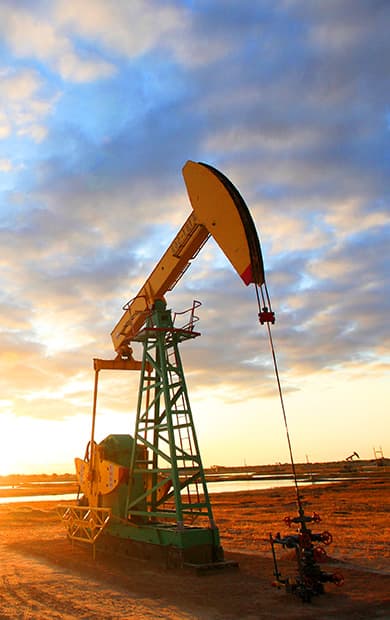
WTI Houston: the Heart of Global Oil Markets

Argus can help you to discover US Gulf coast’s pivotal role in shaping the global oil landscape. As a central production hub, this region contributes 12% of the world's oil production, with over 9 million daily barrels, including offshore production. Home to 10% of global refining capacity, PADD 3 boasts over 50 complex refineries and a CDU capacity of 10 million barrels per day.

US Gulf Coast role in global oil

World's oil production

12% of the world's oil production, with over 9 million daily barrels, including offshore production.

Global refining capacity

Home to 10% of global refining capacity, PADD 3 boasts over 50 complex refineries and a CDU capacity of 10 million barrels per day.

Global oil volumes

With WTI crude being exported to over 70 countries, this region is a cornerstone of global oil exports, accounting for 10% of global oil volumes.

Argus WTI Houston: Your Benchmark for Price Transparency

Argus WTI Houston is at the forefront of price transparency, ensuring fair and accurate pricing within the global oil market. With WTI crude being exported to over 70 countries, this region is a cornerstone of global oil exports, accounting for 10% of global oil volumes.

A Global Waterborne Crude, Underpinned by a Liquid Pipeline Market

In most major markets, crude oil is transported by water. However, the WTI Houston and Midland markets are unique, with oil travelling first by pipeline in rateable transactions. This high volume of daily transactions provides numerous points of price discovery throughout the day, expertly captured by our team of crude oil market reporters. Cargoes at the US Gulf Coast are priced at a differential to the pipeline market, benefiting from the underlying price dynamics of the highly liquid and transparent US pipeline market.

Understanding the WTI Supply Chain

Understanding the WTI supply chain and the drivers of its price formation is imperative for anyone buying, selling, or trading crude oil globally. The Gulf Coast stands out with its ability to process heavy crude, housing over 60% of global coking capacity. This region produces and consumes a significant amount of oil, creating a unique market with integrated production and refining capabilities.

WTI and Argus: A Deeply Rooted Relationship

Argus WTI assessments at Midland and Houston have been the standard physical benchmarks for US crude and settlement indexes for a robust derivatives market for two decades. These prices are assessed as differentials to the Argus WTI formula basis, based on the Nymex light sweet crude futures contract — one of the world’s most actively traded oil futures. Argus WTI Houston and Argus WTI Midland collectively form the basis of the world’s third-largest crude oil derivatives market, after Nymex light sweet and Ice Brent. Our rich, deep, and trusted coverage of the US crude oil market is unrivalled, making Argus the clear choice for trading companies seeking to manage WTI positions in both physical and paper markets.

Latest crude oil news

Browse the latest market moving news on the global crude oil industry.

News
11/05/26

Trump backs suspension of US gasoline tax

Trump backs suspension of US gasoline tax

Washington, 11 May (Argus) — President Donald Trump said on Monday he wants to suspend a federal tax on gasoline as a way to ease prices for consumers, as his efforts to reopen the strait of Hormuz and end the war in Iran continue to hit obstacles. The excise tax on gasoline should be suspended until it is "appropriate" to reinstate, Trump told reporters, as he reiterated his prediction that gasoline and oil prices would "drop like a rock" once the war with Iran ends. The US collects a tax of 18.4¢/USG on gasoline and 24.4¢/USG on diesel. Pausing the collection of the tax, which would require approval by the US Congress, could put downward pressure on surging fuel prices that are nearing a four-year high. "It's a small percentage, but it's still money," Trump said. US consumers paid an average of $4.45/USG for regular grade gasoline, inclusive of taxes, in the week ending 4 May, according to the US Energy Information Administration. Trump had campaigned heavily on lowering prices — he pledged to cut gasoline prices in half within a year — but his war against Iran has caused price spikes. Trump has yet to say if he supports suspending only the gasoline tax or also the tax on diesel. Suspending fuel taxes has bipartisan support. US senator Josh Hawley (R-Missouri) said on Monday he would introduce a bill to suspend the gasoline tax. In March, US senators Mark Kelly (D-Arizona) and Richard Blumenthal (D-Connecticut) introduced a bill to suspend the tax through 1 October. Earlier this year, Senate majority whip John Barrasso (R-Wyoming) sponsored a bill to repeal a separate 16.4¢/bl tax on crude and refined products under the "Superfund" hazardous waste site cleanup program. Despite the political appeal of pausing fuel taxes, doing so would blow a major hole in the budget for roads and highways. Suspending gasoline and diesel fuel taxes would cost $39bn/yr, nonprofit group Committee for a Responsible Federal Budget said in March. A one-year fuel tax holiday would cause the US Highway Trust Fund, which pays for highways and road repairs, to run out of funding in June 2027, or 14 months early, the group said. Trump has been struggling to negotiate an end to the war with Iran in a way that would reopen the strait of Hormuz and meet other policy goals. On Monday, he reiterated complaints with Iran's latest offer to end the war as a "piece of garbage". Trump also said the US-Iran ceasefire that began a month ago was under strain. "I would say the ceasefire is on massive life support," Trump said. High gasoline prices have become a growing frustration to the administration. After the White House spent much of last year taking credit for declines in the national average price that drivers paid for gasoline, Trump's cabinet is arguing that the focus by the news media on national prices is misplaced. "If any of you could write a story that isn't the national average price of gasoline, it's just, that's a fake thing," US interior secretary Doug Burgum said Monday during an event held by the news outlet Breitbart. "The price of gasoline varies by state, varies by policy, varies by taxes, and there's some really rich reporting in there about the choices people have made." By Chris Knight Send comments and request more information at feedback@argusmedia.com Copyright © 2026. Argus Media group . All rights reserved.

News

Oil rally lures shale independent, but majors unswayed


11/05/26
News
11/05/26

Oil rally lures shale independent, but majors unswayed

New York, 11 May (Argus) — Diamondback Energy is among the first US shale independents to accelerate drilling in response to the war-fuelled rally in oil prices, while the US majors stick to plans set out before the Middle East conflict. For the most part, the US oil industry has been reluctant to heed calls from the White House to step up output as oil prices surged above $100/bl, against the background of a crisis that has left the strait of Hormuz oil chokepoint effectively shut for over two months. The administration has been preparing for extended disruptions to Mideast Gulf oil supplies. President Donald Trump last month extended by 90 days a waiver of domestic shipping requirements under the Jones Act, while invoking a Korean War-era defence law in a bid to boost oil production and refining. But the US oil industry remains reluctant to increase output, given the uncertainty over how long the war will last. Its caution reflects some tough lessons from the past, when shale booms during bouts of higher prices were quickly followed by bust. But Diamondback, known for using a "stoplight" analogy over the past year when setting out its drilling intentions, says the light has now turned green, thanks to signs of growing worldwide supply disruptions. "If that isn't a signal to grow production in an advantaged area like the Permian basin, then I don't know what is," chief executive Kaes Van't Hof says. The operator will draw down its balance of drilled-but-uncompleted wells to maintain current output of more than 520,000 b/d — an increase of 3pc from original guidance for this year. It also expects to run five completion crews consistently for the rest of the year and to add 2-3 rigs. The company has scope to further grow output if it decides to. Diamondback sees the Permian adding 20-30 rigs overall in response to the price surge, with privately held operators leading the way. That is a far cry from the 100 or so rigs added during the price rally in 2022 that was spurred by Russia's full-scale invasion of Ukraine, and reflects consolidation in the shale patch in the intervening years and a dwindling number of private firms. "They're going to move very quickly," Van't Hof says. "I just don't think the volume impact will be nearly what we saw in that 2022 timeframe." The US oil majors are taking a different approach as they navigate the challenges from the war across their global operations. Before the conflict, ExxonMobil was already forecasting that its Permian output would grow by 12pc this year to 1.8mn b/d of oil equivalent (boe/d). Chief executive Darren Woods reiterates that it is not the company's view that the basin is set to plateau any time soon, unlike others in the industry. "We're going to continue on the pace that we've been at," Woods says. "I would say we are running pretty full speed." Cash flow before crude flow Chevron had already moderated production growth in the Permian in favour of cash flow, and its output from the Permian is just over 1mn boe/d. "We could hit the gas and begin to grow it again, but I don't know what the future looks like," chief executive Mike Wirth says. Right now, the value the company is seeing in improved asset reliability and reduced lost output to downtime is "very real", he adds. "A shift to quickly turn to more production growth might dilute that focus." Other US operators have unveiled modest tweaks to output plans in response to the recent surge in crude prices. EOG Resources is allocating some resources for the rest of the year to liquids assets from natural gas, while keeping its overall spending unchanged. Chief executive Ezra Yacob says it is too early to predict how next year will shape up: "We're just not quite there yet as far as making a call on picking up rigs or frac fleets and investing longer-term." By Stephen Cunningham Send comments and request more information at feedback@argusmedia.com Copyright © 2026. Argus Media group . All rights reserved.

News

Latam producers take strait shot at investment


11/05/26
News
11/05/26

Latam producers take strait shot at investment

Houston, 11 May (Argus) — Latin America's fastest growing crude producers — Brazil, Guyana and Argentina — gushed at last week's Offshore Technology Conference in Houston, Texas, about how their upstream opportunities are even more attractive because of the war in the Middle East. Brazilian crude exports "do not go through a strait", and offer an alternative to reliance on producers around a troubled Mideast Gulf, as Brazilian oil regulator ANP's director-general, Artur Watt, said. The three countries together already produce about 6mn b/d of crude, including a record 4.2mn b/d from Brazil in March, more than 900,000 b/d from Guyana and almost 900,000 b/d from Argentina. The 6mn b/d is six times Venezuela's production, and far above Mexico's 1.64mn b/d. But the three fastest-growing non-Opec producers want more investment to ensure the streak continues. Brazil needs to replace reserves to face a possible decline after 2030, Argentina has still not fully tapped its onshore Vaca Muerta formation and Guyana is seeking more investors beyond the ExxonMobil-led consortium that is its sole producer. But upstream investment is tight globally, with two-thirds of energy investment this year going to renewable energy, the IEA has forecast. Guyana's president, Irfaan Ali, called last week for the investment gap between renewable and fossil energies to be closed, to ensure enough fossil fuels can be produced to provide base-load energy supply. Oil service provider Baker Hughes expects a low single-digit fall in upstream investment globally this year. It called for more investment , particularly in Latin America as well as the US and other deepwater regions. But even with big, beautiful blocks, the region will have to fight for its share of a shrinking pie to not miss this shot at expansion, government and company officials acknowledged. In Brazil, even seismic data are "beautiful", as a government promoter put it while touting the offshore Mogno block — in the prodigious pre-salt and which Brazil hopes to auction this year — to a room of potential investors. Not as big but almost as beautiful as Buzios, one of the world's largest deepwater fields, ANP superintendent Marina Abelha said at a roadshow of 2026 offerings. But the country will need to work on the "predictability, stability and pace" of its oil investment environment to remain competitive as global capital grows increasingly selective, its leading private-sector producer Shell's vice-president of pre-salt operations, Pablo Tejera Cuesta, said. While Brazil is highly attractive for capital, "it doesn't necessarily mean it is here to stay unless we fight for it", he said. "It is not a question of demand, but where does the capital flow and why." Brazil is working on ways to spruce up its offers, state officials said, including increasing an offer of barrels for export this year, building a digital bidding platform for acreage auctions and constantly reviewing new areas to offer. Scale and pace Argentina is banking on its large-investment promotion scheme, Rigi, to pull in more upstream spending. The country needs more partners given the scale of infrastructure required, state-owned YPF's chief executive, Horacio Marin, said. "We need all the companies to build a profitable ecosystem," he added. Guyana is also reviewing investment and related laws, even after passing its petroleum investment framework law in 2023, Bobby Gossai, a senior adviser to the natural resources ministry, said. It also recently signed an agreement to start 6-12 months' work on 3D seismic offshore, to process data for future bidding rounds. It wants these to be "a little more business-friendly and investment-friendly", he said, even if not as big as Stabroek, Guyana's only producing block. "You are pushing at an open door," Gossai said. "Guyana is open for business." By Carla Bass Send comments and request more information at feedback@argusmedia.com Copyright © 2026. Argus Media group . All rights reserved.

News

Iran says its response to US 'reasonable, generous'


11/05/26
News
11/05/26

Iran says its response to US 'reasonable, generous'

Dubai, 11 May (Argus) — Iran's foreign ministry said on Monday that Tehran's response to the latest US proposal to end the war was "reasonable" and "generous," pushing back against US president Donald Trump's characterisation of it as "totally unacceptable." "Is our proposal for safe passage through the strait of Hormuz excessive? Is an important issue like re-establishing security and peace in the region, an irresponsible demand?" foreign ministry spokesman Esmail Baghaei asked, rhetorically. "All we proposed were reasonable and responsible demands, and generous proposals, not only for Iran's national interests, but also for the good, stability and security of the region and the world," he said. Trump overnight labelled the Iranian position as "totally unacceptable," dashing hopes of an imminent conclusion to the conflict. Crude futures rose sharply in early trading today, with the front-month July Ice Brent contract hitting an intraday peak of $105.99/bl before coming off to trade just below $104/bl. Trump last week said a peace deal under discussion with Iran would reopen the strait of Hormuz to navigation and lift the US blockade on Iranian trade. Baghaei today said the US' conditions continue to be "one-sided… and unreasonable". The US has been highlighting the reopening of the strait of Hormuz, and a shuttering of Iran's nuclear capabilities, as its top conditions to bring the war to an end. Washington is looking for Iran to put an end to its nuclear enrichment activities, and to hand over its stocks of around 400kg of highly-enriched uranium. But Iran's priorities to end the war lie elsewhere, which has been complicating the diplomatic track. "At this stage, our focus is on what is urgent," Baghaei said. "And what is urgent is ending the war in all its forms, including Lebanon and ensuring the safety and security of navigation through the [Mideast] Gulf and the strait of Hormuz… which includes stopping the illegal actions of the US against commercial ships." "What decisions we make on the nuclear issue, on Iran's [highly enriched] materials and on issues related to enrichment activities is something we will discuss when the time is right," Baghaei said. By Nader Itayim Send comments and request more information at feedback@argusmedia.com Copyright © 2026. Argus Media group . All rights reserved.

News

UAE's Opec exit raises questions as output plummets


11/05/26
News
11/05/26

UAE's Opec exit raises questions as output plummets

London, 11 May (Argus) — The UAE's departure from Opec has reinforced Saudi Arabia's already dominant leadership of the group, but it also presents an opportunity for other members, including smaller ones, to gain greater influence over policy decisions. The exit of the UAE from Opec and the wider Opec+ has shaken the alliance to the core and raised serious questions over the group's cohesion. It could even prompt others to reassess their membership in the group. But life outside Opec would be challenging. Most Opec members have historically relied on larger producers, particularly Saudi Arabia, to lead policy given its superior market knowledge and intelligence, in the expectation that its decisions will ultimately benefit all. The UAE was perhaps unique among the group in its ability to go it alone. Unlike most other members, it has a proven ability to rapidly deploy new production capacity. And no other member, apart from Saudi Arabia, has the sort of deep oil market knowledge that would allow it to successfully navigate global oil markets. Still, the importance of ensuring group cohesion could lend a greater voice to other members on policy decisions and potentially see Saudi Arabia adopt a more accommodating stance. After all, even the exit of a small African producer would present poor optics, particularly if it happens soon after the UAE's departure. The chief candidates for a greater role in Opec, and by extension Opec+, are the group's other Mideast Gulf producers Iraq and Kuwait. Iraq remains Opec's second largest member and has ambitious plans to increase its production capacity from around 4.5mn b/d to 6mn b/d. While it has the reserves, the country has struggled to advance long-standing growth projects, including export capacity expansions, largely due to political instability. It is also paying the price of not building sufficient export infrastructure that would allow it to meaningfully bypass the strait of Hormuz. If Iraq is to play a more influential role within Opec, it may also have to assert greater control over production in the semi-autonomous Kurdish region, which has long undermined its credibility in the group. Kuwait is also a major producer and one of the few members with significant spare production capacity. Before the effective closure of the strait, Kuwait was producing around 2.6mn b/d compared to its stated production capacity of about 3mn b/d. But while it has ambitious plans to boost capacity to 4mn b/d, recent additions have merely managed to counter natural decline. Its total reliance on the strait of Hormuz for its oil exports has also meant it has been one of the hardest hit members due to the closure of the waterway. Other members such as Algeria may also clamour for a greater role. While its production capacity is smaller, the country its politically stable and is located outside the increasingly precarious Mideast Gulf region. It also highly values its membership for the international recognition this brings — something that is even more important to smaller African members. The UAE's exit could even prompt Opec to speed up efforts to sign up new members. Opec+ crude output plummeted by 1.59mn b/d in April, Argus estimates. The drop left group production about 11mn b/d below pre-war levels and was mainly driven by further reductions in the Mideast Gulf as members had to shut in production due to the war and effective closure of the strait of Hormuz — their main export outlet (see table). Russia's output is also under pressure from Ukrainian attacks on its oil facilities. Opec+ crude production mn b/d Apr Mar* Target† ± target Opec 9 13.40 14.71 23.49 -10.09 Non-Opec 9 12.59 12.91 13.45 -0.86 Opec 18 25.99 27.62 36.94 -10.95 Total Opec+ 31.34 32.93 na na *revised †includes extra cuts agreed in Apr 23 Opec wellhead production mn b/d Apr Mar Target† ± target Saudi Arabia 6.32 7.00 10.17 -3.85 Iraq 1.40 1.70 4.30 -2.90 Kuwait 0.56 1.17 2.60 -2.04 UAE 2.02 1.90 3.43 -1.41 Algeria 1.00 0.98 0.98 0.02 Nigeria 1.57 1.45 1.50 0.07 Congo (Brazzaville) 0.30 0.26 0.28 0.02 Gabon 0.19 0.21 0.18 0.01 Equatorial Guinea 0.04 0.04 0.07 -0.03 Opec 9 13.40 14.71 23.49 -10.09 Iran 2.95 3.08 na na Libya 1.35 1.23 na na Venezuela 1.05 1.00 na na Total Opec 12^ 18.75 20.02 na na †includes extra cuts agreed in Apr 23 ^Iran, Libya and Venezuela are exempt from production targets Note: UAE exit is effective from 1 May Non-Opec crude production mn b/d Apr Mar* Target† ± target Russia 9.00 9.20 9.64 -0.64 Oman 0.83 0.83 0.82 0.01 Azerbaijan 0.46 0.46 0.55 -0.09 Kazakhstan 1.72 1.80 1.58 0.14 Malaysia 0.35 0.35 0.40 -0.05 Bahrain 0.02 0.06 0.20 -0.18 Brunei 0.08 0.08 0.08 0.00 Sudan 0.01 0.01 0.06 -0.05 South Sudan 0.12 0.12 0.12 0.00 Total non-Opec 12.59 12.91 13.45 -0.86 *revised †includes extra cuts agreed in Apr 23 Send comments and request more information at feedback@argusmedia.com Copyright © 2026. Argus Media group . All rights reserved.