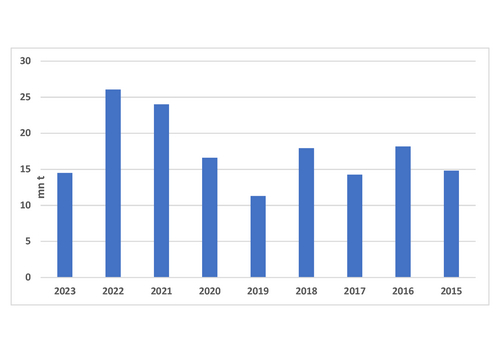
Crop production fell in most regions of Western Australia in 2023, nearly halving from 2022 because of low rainfall.
Total grain production in Western Australia during the 2023 season totalled 14.5mn t, down from 26.06mn t the previous year, according to the final 2023 crop report by the Grain Industry Association of Western Australia (Giwa). The five-year average grain production in Western Australia over 2019-23 was 18mn t, while the previous five-year average was just 3mn t.
There was a stark change in weather conditions from 2022 in 2023, which weighed on grain production. Just around 3pc of wheat was high protein in 2022, compared with 47pc in 2023, Giwa said. Tough growing conditions increase protein content in wheat but reduce output.
Crop area sown was around 9mn hectares (ha) in 2022, but just under 8.5mn ha of crop was sown in 2023, lower compared to the previous three years because of the lack of sub-soil moisture heading into the cropping season and below average rainfall forecast during the growing season, Giwa said.
Barley production rose in 2023, whereas a quick dry finish to the season did not allow wheat crops to grow to potential. Barley output grew as its varieties are more robustly resistant to disease and rely less on fungicides.
There are unlikely to be major changes to cropping plans in 2024 compared to 2023, although if dry, hot conditions continue, there will be a decline in input costs and subsequent area planted. Sub-soil moisture levels are very low in most regions, and Western Australia has recorded high temperatures in January and the start of February, the Giwa report said.
Barley is likely to be preferred over wheat during the 2024 season because of its relatively higher grain yield compared to wheat in drier conditions, Giwa said. Barley will be preferred also because of market opportunities presented by the reopening of the China export market.
Canola planting area could drop to around 1.5mn ha in 2024 from 1.87mn ha in 2023 if planting begins late, but could also rise to over 2mn ha if weather conditions are favourable during planting time.
Rain was mixed across southern Western Australia during November-January, with severe thunderstorms in some cropping areas that damaged power infrastructure, while the west coast and southwestern areas remained dry. The El Nino event in the Pacific Ocean, which brings dry weather, has passed its peak and is likely to decline through the autumn of 2024.