
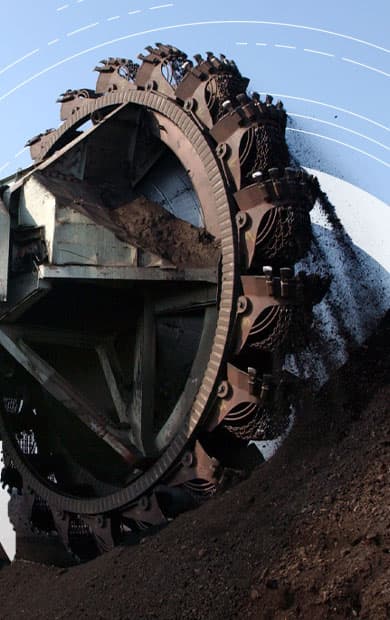

石炭
概要
欧州では、制裁措置により石炭の輸入先がロシアから他の供給国にシフトしています。電力ミックスにおける石炭の役割はピーク負荷用へとさらにシフトしており、今後のプランニングはより困難になっています。
アジア太平洋地域では、一般炭が電力・産業部門の柱であり続けています。世界の石炭貿易のフローと価格スプレッドは変化しており、主要供給国であるロシア、インドネシア、オーストラリア、南アフリカ、コロンビア、米国からのフローは、価格ダイナミクスと貿易障壁に対応して新しい市場に浸透しつつあります。
価格と市場動向を常に注視し、石炭市場が他のエネルギーやコモディティのベンチマークとどのように交差しているかを把握することが、今後数年間はより一層重要になってきます。
Latest coal news
Browse the latest market moving news on the global coal industry.
Mideast Gulf bloc to push energy security at Cop 30
Dubai, 27 October (Argus) — As Brazil prepares to host the UN Cop 30 climate summit in Belem on 10–21 November, Mideast Gulf oil producers, Saudi Arabia, the UAE, Qatar, Kuwait, Bahrain, Oman and Iraq, will aim to safeguard their energy export economies — touting their role in global energy security — while pursuing the green transitions at home essential for economic diversification. Cop 30 is tasked with weighing up updated nationally determined contributions (NDCs) — climate plans — for 2035, scaling climate finance, and operationalising the Cop 28 call to transition away from fossil fuels, triple renewables and double energy efficiency made in the UAE in 2023. But Gulf Co-operation Council (GCC) states are seeking a "just transition" that avoids any suggestion of oil and gas production caps, while securing funding and technology transfers. GCC states and Iraq, which together hold 40pc of global oil reserves and 25pc of natural gas reserves, want to prioritise fast-tracking climate finance, calling for $1 trillion/yr by 2030 in grants, not loans, to support adaptation in heat and water-stressed economies. They will be seeking $100bn in Just Energy Transition Partnership-style deals — for funding coal phase-outs and renewables, as seen in Indonesia and South Africa — to potentially include Oman and Bahrain. They seek multi-donor bank reform and swift disbursements through the World Bank-hosted Loss and Damage Fund. Dedicated finance for desalination, cooling, agriculture and grid-hardening in extreme heat will also be a priority, with calls for fast-tracked concessional funds tied to Cop 30's "planning to action" mandate. For the GCC and Iraq, gas will remain a "transition fuel", and will continue to be promoted as a coal-displacing, reliable back-up. GCC states will be likely to resist a blanket approach for a fossil fuel "phase-out", focusing on "unabated" emissions reductions through methane cuts and carbon capture and storage (CCS). They seek clear Paris Agreement Article 6 rules, enabling carbon credit trading to monetise "high-integrity" credits. Qatar, home to the Global Carbon Council, aims to standardise baselines for the project's global market integration. Methane abatement is a potential flashpoint. Committed to near-zero methane and zero routine flaring by 2030, GCC producers want these efforts funded as implementation, not new pledges, and building on the Cop 28 oil and gas decarbonisation charter and global methane pledge, they seek financing to scale monitoring, reporting and verification. Oil production Belemwether Diplomatically, the GCC states see an opportunity. Brazil, which plans to expand its own oil output to 2030, will have to hedge its position in pushing for a fossil fuel phase-out. This might give the Arab bloc space to advocate a "dual-track" approach, balancing renewables and efficiency with stable oil and gas supplies for global energy security. When their rising oil and gas capacity is invoked versus touted net-zero targets for 2050-60, they are likely to position themselves, yet again, as the bridge between the global energy security and climate ambition. The UAE is the only GCC country that has submitted a new NDC, and their ambitions are highly likely to lag the 1.5°C pathway's 43pc global emissions cut by 2030, compared with 2019 levels. They will continue to champion CCS, efficiency and growing renewables rather than agree on oil and gas production output cuts. They are likely to prioritise implementation over new commitments and caution against policy shocks through semantics. For Brazil and the UNFCCC process, the question is whether this pragmatism anchors consensus or slows fossil fuel demand decline. The GCC's calculus is clear — sustain revenue streams for economic diversification while its oil and gas underpins global energy security in the transition. By Bachar Halabi Send comments and request more information at feedback@argusmedia.com Copyright © 2025. Argus Media group . All rights reserved.
New Zealand to pivot to coal ahead of gas supply boost
Sydney, 24 October (Argus) — New Zealand's government will increase coal-fired electricity output to conserve gas for industry, while it mulls LNG imports and aims to boost upstream activity via a new co-investment fund. Displacing gas-fired electricity generation in favour of coal is the short-term solution to New Zealand's gas shortage woes, resources minister Shane Jones told Argus on the sidelines of the International Mining and Resources Conference (IMARC) in Sydney, Australia, this week. New Zealand's only coal-fired generator the 953MW Huntly facility , which can also operate on gas, may be joined by another coal plant the coming years. The country is grappling with an energy shortfall and the lowest gas production this century , while estimated gas reserves fell by more than a quarter in 2024. "I see our coal consumption in the short to medium term going a lot higher, probably building another coal-fired power station," Jones said. Huntly's owner utility Genesis Energy recently signed a two-year 240,000t deal for domestic coal supply. Coal imports, mostly sub-bituminous coal used at Huntly, rose by 311pc on the year in 2024, the government reported. Aside from coal, further generation could come on line at the site of the former 135,000 b/d Marsden Point refinery, where owner of the import terminal Channel Infrastructure may build a diesel-fired power station using significant transmission capacity situated there. A 50-100MW peaker plant could cost less than NZ$200mn ($115mn), Channel said. A month after dismantling the 2018 ban on oil and gas exploration covering much of the country, the centre-right coalition government is also aiming to finalise the procurement process for an LNG import terminal at Port Taranaki before the next election, due in late 2026. The government is planning to cut regulations in future to boost renewable power projects, explore deep geothermal resources and secure further gas production. A NZ$200mn ($115mn) fund to buy stakes of up to 15pc in new gas fields is part of New Zealand's efforts to drive new supply, despite a lack of interest from one of the country's major players . Negotiations are underway with existing and potential investors, Jones said, pointing to known fields with reserves. The fund will be spread across a series of projects, including possible gas storage facilities. On liquid fuels, Jones said numerous investors are seeking to build a biorefinery that can be boosted with a distinctive planning, taxation and zoning regime to create incentives. Creating a strategic fuel reserve in concert with the US government in New Zealand is being considered, based on the strategic fuel reserves held in the western Pacific Ocean territory by Washington, Jones added. By Tom Major Send comments and request more information at feedback@argusmedia.com Copyright © 2025. Argus Media group . All rights reserved.
Morocco eyes conditional coal power phase-out by 2040
Dubai, 23 October (Argus) — Morocco has committed to phasing out coal power by 2040 providing it receives international support and funding, according to the country's new NDC for 2035 — climate plan. The commitment is dependent on the country receiving the right support to close coal power plant earlier than planned and manage contractual commitments. Without international support, Morocco, which in 2023 joined the Powering Past Coal Alliance (PPCA) alliance created by Canada and the UK, commits to cutting coal use in the 2040s. Under the PPCA, countries pledge to phasing out existing unabated coal power generation and to build no new unabated coal power stations. "The kingdom of Morocco has stopped planning new coal power plants," minister of energy transition and sustainable development Leila Benali said. Coal accounted for 29.2pc of the country's energy supply and 62.2pc of its power generation in 2023, according to the IEA, making it heavily reliant on imports. Coal accounted for 42pc of Morocco's CO2 emissions from fuel combustion in 2022, the IEA said. Moroccan utilities have continued to show strong term contract demand for coal, unlike most buyers in Europe, which have turned away from long-term contracts given coal's marginalisation in the energy mix for power generation. The country has also pledged to triple its renewable energy capacity to more than 15GW by 2030, strengthen power grids, and expand energy-storage capacity, aligning its goals with the call on renewables made at the UN Cop 28 climate summit in Dubai. "The gradual phase-out of coal power, combined with the rapid scale-up of renewable energy, will reinforce our energy security and drive clean economic and social growth," Benali said. Morocco's new NDC — which builds on existing climate strategies, including the National Low-Carbon Strategy to 2050 — sets the national greenhouse gas (GHG) reduction target to 53pc by 2035 relative to a business-as-usual (BAU) scenario. BAU scenarios typically assume emissions based on current policies, leaving room for potential increases. Around 31pc of the emissions cuts under the new target depends on the availability of financing. Morocco is a major fertiliser producer and exporter is eyeing 8.35mn tonnes of CO2 equivalent cuts from its key phosphate sector by 2035, with some projects depending on access to funding. Morocco is sitting on some of the largest phosphate rock reserves. The country also pledged to cut methane emissions between 23.5pc-36.2pc by 2030 and by 31.7pc-56.8pc by 2050 in the agriculture and waste sectors. It Morocco estimates the total funding required for mitigation — actions to cut emissions — and adaption to implement its 2035 target at around $96bn. By Bachar Halabi Send comments and request more information at feedback@argusmedia.com Copyright © 2025. Argus Media group . All rights reserved.
Japan elects Sanae Takaichi as new premier
Osaka, 21 October (Argus) — Japan's ruling Liberal Democratic Party (LDP) president Sanae Takaichi has officially become the country's new prime minister after finding a new coalition partner for the minority government, following the collapse of the LDP's 26-year alliance with political party Komeito. Japan's parliament elected former economic security minister Takaichi as the country's 104th prime minister on 21 October, making her the first woman to lead Japan's cabinet. She replaces Shigeru Ishiba, who officially resigned on 21 October, having served as premier since 1 October 2024. Takaichi's victory comes after she agreed to form a coalition government with the Japan Innovation Party, an opposition party known as Ishin, on 20 October. She signed the deal with Ishin representative and Osaka governor Hirofumi Yoshimura and party co-leader Fumitake Fujita. Takaichi, who was named as LDP leader on 4 October, faced challenges in seeking her party's support, especially after Komeito dissolved its coalition with the LDP on 10 October, blaming the LDP's funding scandals. The breakdown of the LDP-Komeito coalition caused political turmoil. Opposition parties including the Ishin, the Democratic Party For the People, as well as the Constitutional Democratic Party of Japan (CDPJ) — the country's largest opposition party — held discussions about possible tie-ups for the leadership race, especially as the LDP lacks a majority in both houses of parliament. The Ishin signed the coalition deal with the LDP, after ending policy talks with its opposition peers on forming alliances to change the government. Takaichi agreed on 12 key policy priorities, which the Ishin had proposed and said were requisites for it to be in favour of Takaichi as prime minister. The priorities included economic measures, national, economic and social securities, energy, political reform, among others. Energy policies The LDP's energy policies will generally be intact despite the Ishin's 12 policy items. Both parties are pushing to develop next-generation reactors including fusion power, along with restarting existing ones, to meet expected increases in electricity demand. Takaichi is looking to nuclear power to ensure stable electricity supplies at relatively low costs. Meanwhile, the CDPJ has opposed replacing nuclear reactors or building new ones, making it difficult for the party to form a coalition with the LDP, as well as opposition parties. The Ishin also supports the development of renewable energy, including geothermal power , similar to former premier Ishiba who pushed to develop Japan's geothermal capacity. But the Ishin also aims to regulate the installation of large-scale solar facilities that will lead to deforestation. The Ishin also aims to speed up the development of ocean resources in the national territory, in line with the LDP's strategic energy plan. Counter-inflation measures The LDP-Ishin coalition could pass a bill to abolish the provisional gasoline tax during the extraordinary diet session, over 21 October-17 December, to mitigate rising inflation. Japan's gasoline tax rate is currently set at ¥53.80/litre (36¢/litre) — or a ¥28.70/litre base rate plus a ¥25.10/litre extra rate. Opposition parties, including the Ishin, have repeatedly requested the removal of the additional tax, despite the move likely to result in higher greenhouse gas emissions because of increased use of motor fuel. The two parties are also hoping to enact a supplementary budget during the current extraordinary diet session to secure funding to resume subsidies for gas and electricity to help ease the burden on consumers. Tokyo provided such grants to consumers during July-September to ride out the summer heat. The LDP also agreed to consider carrying out the Ishin's proposal of abolishing consumption tax on food and beverage for two years, as part of the coalition deal. By Motoko Hasegawa Send comments and request more information at feedback@argusmedia.com Copyright © 2025. Argus Media group . All rights reserved.
Spotlight content
Browse the latest thought leadership produced by our global team of experts.
Spotlight content
Browse the latest thought leadership produced by our global team of experts.
Explore our coal products
Real time access to trusted price assessments, indexes, global market intelligence, analytics and outlooks for European, Asia-Pacific, Americas and African coal markets.
主な価格査定
アーガスの価格は、実際の市場価値を知る、信頼できる指標として市場で認められています。最も広く利用され、関連性の高い価格査定の一部をご覧ください。


