
LNG
概要
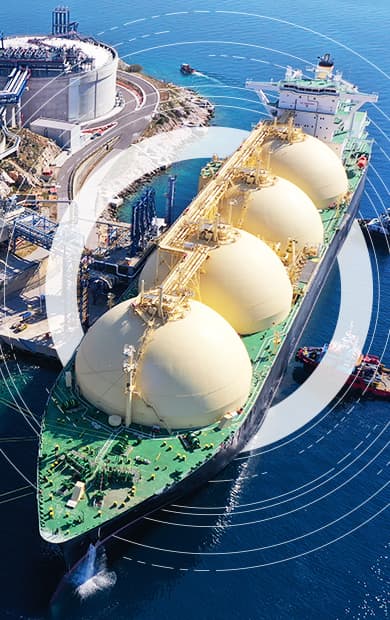
LNGは、投入コストと炭素排出の両方を管理するのに役立つため、重要な原料としての位置を確立しています。重工業ユーザーによるネットゼロ目標達成の推進は、LNGの使用方法と使用場所に新たな局面をもたらしています。全体として、使用量は増加すると予想され、最も成長率の高い化石燃料になると予測されています。
アーガスは、国際的なLNG市場に関する詳細かつ信頼性の高い視点を専門的に提供します。お客様は重要なデータセットや分析、包括的な分析、市場を動かす業界ニュースへのライブアクセスを得ることができます。アーガスのLNGサービスは、世界中の主要なLNG取引ハブに拠点を置く市場専門家によるものです。
160カ国の企業、商社、政府が、より賢明な意思決定、状況分析、リスク管理、取引の円滑化、長期計画の立案をサポートするために、当社のデータを信頼しています。
Latest LNG news
Browse the latest market moving news on the global LNG industry.
US starts enforcing blockade of Hormuz: Trump
US starts enforcing blockade of Hormuz: Trump
Washington, 13 April (Argus) — The US set out on Monday to intercept ships leaving Iranian ports or heading to Iran through the strait of Hormuz, ostensibly to increase US leverage in peace negotiations with Tehran. The blockade , which went into effect at 10am ET (14:00 GMT) Monday, ought to force Tehran to make a deal with the US and reopen the strait of Hormuz, President Donald Trump told reporters on Monday. Trump — as he has done on many occasions since the war with Iran started on 28 February — claimed that Iran in fact became more pliable following his decision to enforce a blockade. "We've been called this morning by the right people, the appropriate people, and they want to work a deal," he said, without offering any details. Senior US and Iranian officials failed to make a breakthrough in marathon talks over the weekend in Islamabad, Pakistan. From the US' perspective, the key stumbling block is Iran's nuclear program. "Iran will not have a nuclear weapon, and we agreed to a lot of things, but they didn't agree to that," Trump said. "And I think they will agree to it. I'm almost sure of it. In fact, I am sure of it. If they don't agree, there's no deal, there'll never be a deal." Iran has warned it could target ports across the Mideast Gulf if its own facilities are attacked as a result of US naval operations, describing US plans to impose a blockade on Iranian ports as "piracy". Tankers from neutral countries that are currently loading Iranian cargo have been granted a grace period to get through the US' announced blockade, according to the UK Maritime Trade Operations. As much as 36pc of all tanker traffic transiting the strait of Hormuz since the start of the US–Iran war either departed or were bound for Iranian ports. In Trump's words, Tehran's ability to prevent non-Iranian trade from transiting Hormuz is detrimental — "They're really blackmailing the world. We're not going to let that happen." — but also not affecting the US very much. "We don't use this trade," Trump said. "We have our own oil and gas much more than we need. We have more oil and gas than Saudi Arabia." Trump earlier on Monday posted on his social media platform that "34 Ships went through the Strait of Hormuz yesterday, which is by far the highest number since this foolish closure began." Trump told reporters that other countries have offered to help enforce the blockade even though "we don't need other countries". He said he would announce on Tuesday which countries will join the US in enforcing the blockade. The UK and France said on Monday they would co-host a summit with more than 40 countries participating to discuss how to safeguard shipping through Hormuz, adding that their participation will begin "when the conflict ends". Trump, who last month said he expected the war to end within "four to six weeks", said on Monday that he would stick to his original timeline. "Right now there's no fighting. Right now we have a blockade. They're doing no business." The US and Iran agreed to a ceasefire through 21 April to allow for diplomatic talks to hash out a deal. Iran's military capacity has been obliterated, Trump said. "Their navy is gone, their air force is gone, their anti aircraft is gone, their radar is gone, and their leaders are gone." But in a social media post Monday morning, Trump acknowledged that Iran has retained its fleet of speedboats, warning that "If any of these ships come anywhere close to our BLOCKADE, they will be immediately ELIMINATED." By Haik Gugarats Send comments and request more information at feedback@argusmedia.com Copyright © 2026. Argus Media group . All rights reserved.
US blockade could hit third of remaining Hormuz traffic
US blockade could hit third of remaining Hormuz traffic
London, 13 April (Argus) — As much as 36pc of all tanker traffic transiting the strait of Hormuz since the start of the US–Iran war either departed or were bound for Iranian ports, the sort of voyage Washington has indicated will be restricted from today as part of its naval blockade. Of the 148 tankers that have transited the strait since 28 February, Iranian-linked voyages accounted for 53. Among these were 20 very large crude carriers (VLCC), five Suezmax, two Aframax and ten Medium Range (MR). The US on Sunday said it will impose a naval blockade against vessels of all nationalities entering or departing Iranian ports, beginning at 10:00 ET (14:00 GMT) on 13 April. US president Donald Trump also warned ships complying with Iranian transit conditions, including the payment of tolls, could be stopped in international waters. The US plan is to allow navigation through the strait of Hormuz to and from non Iranian ports, much of which is being prevented by Iranian control of the strait. This move follows talks between the US and Iran in Islamabad over the weekend that ended without agreement and failed to reopen the strait. Since a ceasefire declared on 7 April, the waterway has largely remained under Iranian control, and the few ships that have passed through it appear to have either paid an unofficial toll to Tehran — believed to be the equivalent of $1/bl for crude tankers — or to have made other arrangements with the Iranian government. Iran said it would respond to a US naval blockade of Hormuz by encouraging Yemen's Houthis to resume attacks in the Bab al-Mandeb waterway connecting the Red Sea to the Indian Ocean. Tehran also threatened to target ports across the Mideast Gulf if its own facilities are attacked. The ceasefire agreement will be in place until 21 April, but it could be extended. By Erika Tsirikou Send comments and request more information at feedback@argusmedia.com Copyright © 2026. Argus Media group . All rights reserved.
Iran threatens Gulf ports as US blockade looms
Iran threatens Gulf ports as US blockade looms
Dubai, 13 April (Argus) — Iran has warned it could target ports across the Mideast Gulf if its own facilities are attacked, describing US plans to impose a naval blockade on Iranian ports as "piracy". "If the security of Iran's ports… is threatened, no port in the Persian Gulf and the Sea of Oman will be safe," Iran's armed forces said in a statement carried by state broadcaster IRIB. Tehran said US restrictions on vessel movements in international waters are "illegal". Iran also said it would "firmly implement a permanent mechanism to control the strait of Hormuz", under which vessels linked to its enemies would be denied passage. Other ships would be allowed to transit subject to conditions set by Iran's armed forces. The warning comes after Washington said it would begin a blockade of Iranian ports from 10:00 ET (14:00 GMT) today. The move was announced after talks between the US and Iran in Islamabad over the weekend ended without agreement and failed to reopen the strait. Oil prices have risen sharply following the US' blockade announcement. The front-month June Ice Brent contract was $102.41/bl at around 10:45 GMT today, up by about 8pc on the previous close. US Central Command said the blockade would target vessels entering or leaving Iranian ports, while allowing navigation to and from non-Iranian ports through Hormuz. US president Donald Trump also warned that ships complying with Iranian transit conditions, including the payment of tolls, could be stopped in international waters. The negotiations in Islamabad ended after more than 20 hours, with both sides blaming each other for the breakdown. A ceasefire announced earlier this month remains in place but is fragile. No major attacks have been reported on Mideast Gulf energy infrastructure or Iranian targets since the talks, although clashes continue in Lebanon between Israel and Iran-backed Hezbollah. Shipping through the strait of Hormuz remains constrained. French president Emmanuel Macron today called for a "swift, durable diplomatic settlement" and urged the restoration of "free and unimpeded navigation" through Hormuz. France and the UK plan to convene partners in the coming days to establish a multinational maritime mission to safeguard transit. The standoff underscores a widening gap, with Washington seeking to enforce freedom of navigation, while Tehran moves towards a system of conditional access of the strait under its control. Bachar Halabi Send comments and request more information at feedback@argusmedia.com Copyright © 2026. Argus Media group . All rights reserved.
US plans to blockade Iranian ports on Monday: Update
US plans to blockade Iranian ports on Monday: Update
Updates with details on US blockade of Iranian ports Washington, 12 April (Argus) — The US says it will begin a naval blockade of Iranian ports starting on Monday, after talks between Washington and Tehran aimed at ending the fighting in the Middle East and reopening the strait of Hormuz faltered. The US will institute a blockade against vessels from all nations entering or departing Iranian ports, including ports on the Mideast Gulf and the Gulf of Oman, beginning at 10am ET (14:00 GMT) on Monday, US Central Command said on Sunday. US forces "will not impede freedom of navigation for vessels transiting the strait of Hormuz to and from non-Iranian ports", Central Command said. US president Donald Trump earlier on Sunday had threatened to bar passage of ships cleared by Iran and to interdict any ship in international waters that had paid a toll for exiting the Mideast Gulf. "No one who pays an illegal toll will have safe passage on the high seas," said Trump, who previously mulled joint US-Iranian control over the transit through Hormuz and access to any revenue collected from ships passing through it. Ice Brent June futures jumped by around 8.8pc to $102.60/bl in early Asian trading on news of the US blockade. Separately, the US on 11 April opted not to renew a sanctions waiver that had allowed purchases of Russian crude in floating storage, a decision that could further tighten global oil supplies. Talks end without deal Trump ordered the blockade after marathon talks over the weekend between US and Iranian negotiators in Islamabad, Pakistan, failed to achieve results. US vice president JD Vance, who led the US delegation, blamed the lack of progress after 21 hours of negotiations on Iran's reluctance to renounce ambitions to develop a nuclear weapon. The Iranians refused to give up "the tools that would enable them to quickly achieve a nuclear weapon", Vance said. Tehran denies having a program to develop nuclear weapons. Tehran did not provide a specific reason for the lack of results, but Iranian parliamentary speaker Mohammad Bagher Ghalibaf, who led his country's delegation, attributed the lack of a breakthrough to the US failing "to gain the trust of the Iranian delegation in this round of negotiations". Ghalibaf, ahead of the talks, had demanded a halt in the ongoing Israeli military operations in Lebanon and progress in unfreezing Iranian assets held under a US embargo in foreign banks as a precondition for success in negotiations. The talks followed a ceasefire declared on 7 April, with Washington promising to halt its attacks on Iran while insisting Tehran reopen the strait of Hormuz. But the waterway has largely remained under Iranian control, and the few ships that have passed through it appear to have either paid an unofficial toll to Tehran — believed to be the equivalent of $1/bl for crude tankers — or to have made other arrangements with the Iranian government. At least two Chinese very large crude carriers (VLCC) appear to have transited Hormuz on Sunday. The US also accuses Iran of placing mines in at least some parts of the strait. The Pentagon said on Saturday that two US destroyers transited through the waterway into the Mideast Gulf "as part of a broader mission to ensure the strait is fully clear of sea mines previously laid by Iran's Islamic Revolutionary Guards Corps" (IRGC). Tehran asserted that it had warned the two US warships against transiting Hormuz and that further attempts would draw a military response from Iran. Iran also said that it would respond to a US naval blockade of Hormuz by encouraging Yemen's Houthis to resume attacks in the Bab al-Mandeb waterway connecting the Red Sea to the Indian Ocean, according to Iran's Tasnim news agency, which is linked to the IRGC. A skiff with armed people aboard unsuccessfully attempted to board a sailing vessel in the Red Sea, just north of the Bab al-Mandeb, the UK Maritime Trade Operations said on Saturday. What next? Neither Iran nor the US has ruled out further talks, and Iran's willingness to negotiate directly with the US leaves some hope for a negotiated outcome. The ceasefire is nominally in place until 21 April and could be extended. Ghalibaf headed a delegation that included Iranian security, diplomatic and economic officials and communicated willingness to negotiate substantive issues in a way that eluded contacts between the US and Iran since the end of former US president Barack Obama's administration. But the two sides remain far apart, and Tehran and Washington each appears to believe that it holds leverage over the other. Iran has prioritized discussion of sanctions relief and the return of its frozen assets, in addition to formalizing its control over the waterway that under international maritime law should be free for passage. The US' continued insistence on addressing Iran's nuclear program first precludes immediate results from the negotiations. It is not clear whether Iran's nuclear file was addressed in depth. While Vance brought along his national security advisers, there were no representatives from the UN nuclear watchdog the IAEA, who in the previous round of US-Iranian talks provided the technical expertise on Iran's nuclear program. Trump, who previously said that the energy price spike triggered by the war in Iran would soon ease, took a different tack over the weekend. The blockade of Hormuz is a boon for US crude exporters, he said on Saturday: "The empty ships are rushing to the United States to 'load up.'" Trump told Fox Business on Sunday that oil and gas prices "could be the same or maybe a little bit higher" by the November midterm congressional elections. Israel, which is not party to the talks, also retains its ability to influence the future course of US-Iran relations by conducting military operations in Lebanon and elsewhere in the Middle East. The US-Iran negotiations also have excluded the Mideast Gulf states, even though their economies overwhelmingly depend on the freedom of navigation through the strait of Hormuz. By Haik Gugarats, David Ivanovich and Andrey Telegin Send comments and request more information at feedback@argusmedia.com Copyright © 2026. Argus Media group . All rights reserved.
Spotlight content
Browse the latest thought leadership produced by our global team of experts.


Explore our LNG products
Real time access to our independent and trusted benchmarks, critical market data and analytics, in-depth analysis, and the latest market news. Argus LNG is relied upon by energy companies, governments, banks, regulators, exchanges and many other organizations as source of reliable and unique insights into the global markets.
Key price assessments
Argus prices are recognised by the market as trusted and reliable indicators of the real market value. Explore some of our most widely used and relevant price assessments.