
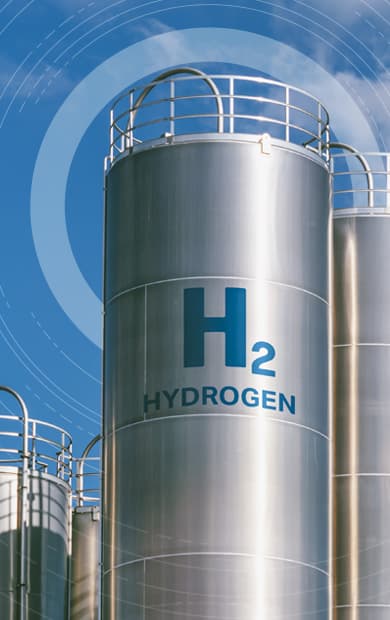
水素
概要
これからの製造ルートは、炭素回収を伴うメタン改質から、再生可能エネルギーや化石燃料を動力源とする熱分解、廃棄物ガス化、電気分解まで多岐にわたります。水素を製造するために使用されるプロセスとエネルギーの組み合わせは、工業用熱と主要化学物質の既存ユーザーに、困難な状況を突きつけています。
Argus Hydrogen and Future Fuels サービスは、産業用電力、化学品、エネルギーのユーザーに、十分な情報に基づいた意思決定を支援するための重要な情報を提供するよう設計されています。プロジェクトに関する上流、輸送と貯蔵に関する中流、アンモニアとメタノールに関する下流をカバーしています。また、世界中の水素に関する最新の技術開発や政策ニュースもカバーしています。
最新ニュース
世界の水素業界に関する最新の市場動向ニュース
Kanadevia, Nippon Steel Engineering to explore merger
Kanadevia, Nippon Steel Engineering to explore merger
Tokyo, 5 February (Argus) — Japanese engineering companies Kanadevia and Nippon Steel Engineering agreed to explore merging their businesses to meet future demand growth for waste management and waste-to-energy plants. Kanadevia and Nippon Steel's wholly owned subsidiary Nippon Steel Engineering signed the initial agreement on 5 February to explore a possible merger by April 2027. The companies aim to finalise their decision by November 2026. Kanadevia and Nippon Steel Engineering expect demand for waste management plants in Japan to grow because of the many domestic plants that are ageing, which will require renewal. The companies also forecast a rise in demand for waste-to-energy plants overseas — especially in growing markets like north America and southeast Asia — given the drive towards decarbonisation. Kanadevia has expanded its decarbonisation businesses, including to waste-to-energy plants and hydrogen- and ammonia-related products. Kanadevia's Switzerland-based green technology subsidiary Kanadevia Inova added 11 UK biogas plants to its portfolio after buying low-carbon asset management firm Iona Capital. Kanadevia plans to start commercial operations of its plant, which will produce polymer-electrolyte-membrane water electrolyser stacks , in the April 2028-March 2029 fiscal year. It also plans to invest in building production facilities for ammonia-fuelled ship engines , aiming to begin operations in 2028-29. Kanadevia will sell 25pc of its stake in its subsidiary Hitachi Zosen Marine Engine by the end of March 2026. Kanadevia expects to own 40pc, while Japan's major shipbuilder Imabari Shipbuilding will raise its share from 35pc to 60pc after the sale. The move is intended to speed up the development of ammonia-fuelled ship engines by allowing Imabari Shipbuilding to lead the project. By Nanami Oki Send comments and request more information at feedback@argusmedia.com Copyright © 2026. Argus Media group . All rights reserved.
Slow UN carbon market advance on removals
Slow UN carbon market advance on removals
Berlin, 2 February (Argus) — The emerging UN carbon market under Article 6.4 of the Paris Agreement, Pacm, saw slow progress last week on draft rules for carbon removals accounting, as experts tasked with working on new Pacm methodologies convened at the UN climate arm's headquarters in Bonn, Germany. The panel made some decisions on the so-called reversal assessment tool, which aims to determine the number of Pacm credits to contribute to the market's reversal risk buffer account, acting as a form of insurance for removal projects. The tool will help calculate individual risk factors, combined risks and the reduction in reversal risk factors, based on any remediation measures implemented by activity proponents. A buffer factor, expressed as a percentage of credited carbon, would then be calculated, depending on the choices made by project proponents. The higher the percentage, the more credits must be set aside for an activity. The panel will also determine specific activity risks, with an initial focus on forest carbon storage, geological carbon storage and biochar. These are not only the most prevalent removal activities in the carbon market, but also dominate those transitioning from Pacm's precursor, the Clean Development Mechanism (CDM). The panel and the Article 6.4 supervisory body were tasked by countries at the UN Cop 30 climate summit in Brazil in November with prioritising CDM transitions . The panel will consider other types of removal activities at a later stage. More progress was made last week on the draft rules for renewable electricity generation, on which the panel released a draft methodology for supervisory body approval. It would become the second approved Pacm methodology, if adopted. The first methodology for generating carbon credits, on flaring or use of landfill gas, is regarded as substantially stricter than its CDM predecessor. Pacm's downward adjustment factor ensures that baseline emissions decline more significantly over time than under the CDM. South Korea-based carbon project developer Ecoeye said under the Pacm landfill gas methodology, flaring-only projects carried out in host countries outside least developed countries are likely to experience a 52–76pc reduction in credited emission reductions, compared with CDM-based estimates, over a five-year period, while for electricity generation and heat production it projects a 34–42pc reduction. The potential third Pacm methodology to be adopted, on clean cooking, considers new submissions while carrying over some elements from an existing CDM methodology. Another methodology under consideration, on nitrous oxide abatement from nitric acid production, might also see a draft proposal at the next expert panel meeting in March. Six new Pacm methodologies in total are under consideration. The latest entry is on fertiliser production with renewables-based ammonia, for which a call for public input closed on 27 January. The panel is considering merging this methodology — the development of which was financed by the Germany-supported International Hydrogen Ramp-Up Programme — with another for ammonia production through electrolysis. By Chloe Jardine Send comments and request more information at feedback@argusmedia.com Copyright © 2026. Argus Media group . All rights reserved.
Natural H2's low-cost potential draws investors: Panel
Natural H2's low-cost potential draws investors: Panel
London, 30 January (Argus) — Natural hydrogen's potential to deliver sub-$1/kg production costs using familiar oil, gas and mining techniques is drawing investor interest, panellists told the Hyvolution conference in Paris this week. Raphael Schoentgen, chief executive of advisory firm Hydrogen Advisors, said oil and gas firms could apply existing geological expertise, drilling skills and subsurface data, with the natural hydrogen sector giving lower upfront spending. Developers such as 45-8 Energy are focusing on shallow wells only a few hundred metres deep and costing a few hundred thousand dollars, limiting early risk. Concerns about a lack of hydrogen in historical drilling reflect where companies drilled, said 45-8 Energy managing director Benoit Hauville. Around 95pc of legacy wells targeted sedimentary basins rich in fossil organic matter, not the iron-rich formations that generate hydrogen, he said. Mining regions are helping to close knowledge gaps. Several nickel and chromium mines have reported hydrogen seepage — sometimes causing safety issues — Hauville said. Historic data are useful, with gas-well records from France's Landes region in the 1960s reporting high hydrogen concentrations near 20pc, he said. Advances in sensing, data collection and machine learning are accelerating exploration. Developers are combining ground and airborne detection, seismology, well surveys and rock sampling to map hydrogen-generating locations. French research institute Ifpen is building basin models that merge geology and algorithmic tools to identify new exploration areas. France is Europe's main testing ground, supported by historic subsurface research. Renewables firm Francaise de l'Energie (FDE) secured a five-year exclusive exploration permit in Lorraine in January. Early exploration success rates often range from 5–20pc, though 45-8 Energy expects its French prospects to reach 20–40pc after new survey work — approaching oil and gas probabilities. Global investment in natural hydrogen has reached about $1bn, said Christophe Hecker, chief executive of advisory NaturalHy. Nearly half is deployed in the US, where developer Koloma has raised around $400mn from investors including Breakthrough Energy and is expanding globally . Europe has a weaker investment culture, Hecker said, with 45-8 Energy raising around €40mn ($48mn). Argus' data show 30 of 51 schemes announced globally are in the US, Australia and Canada , supported by favourable investment and permitting regimes. 45-8 Energy and UK developer H2Au have partnered to drill wells in Kansas and Iowa, with two wells planned this year. Helium co-production is central to project economics. 45-8 Energy and others explore for both gases and are developing purification and recycling systems. Even 1pc helium can add significant value given tight supply, high prices and its use in aerospace, medical imaging and semiconductor manufacturing. The firm recycled and re-purified 6,000m³ of helium from the Paris Olympics' hot-air balloon installation. Low-value gases such as nitrogen can be used onsite in small turbine systems to generate power and improve economics. Cost is the main draw. Studies cited by panellists suggest natural hydrogen could be produced for $0.5–1/kg at the wellhead, with purification adding about $0.5/kg — well below current renewable hydrogen costs and competitive with gas-based production. Shallow exploration programmes typically cost only a few million euros and create value at each de-risking step, offering investors low early exposure and strong upside if reserves are confirmed, Hecker said. But the sector is still "high risk, high reward", he said. Only one known site is producing — in Mali — and at minimal scale. Cost estimates remain theoretical, and uncertainty over reservoir volumes and global reserves is still high. By Chingis Idrissov Send comments and request more information at feedback@argusmedia.com Copyright © 2026. Argus Media group . All rights reserved.
EU e-SAF needs demand tools, standard designs: Panel
EU e-SAF needs demand tools, standard designs: Panel
London, 29 January (Argus) — Europe's build-out of hydrogen-based sustainable aviation fuel (e-SAF) will depend on demand-side tools that secure long-term offtake and on standardised, repeatable plant designs that cut capital costs and execution risk, panellists said at the Hyvolution event in Paris this week. Industry participants and EU policymakers often cite the ReFuelEU Aviation mandate — backed by binding targets and high penalties — as a key driver of e-SAF demand. But developers warned that mandates alone will not unlock final investment decisions (FIDs). No European e-SAF project has reached FID, industry group France Hydrogene said, noting that US-based Infinium remains the only developer globally to have taken one. Europe risks an e-SAF supply shortfall by 2030, the group said. Even with capital expenditure support from the EU Innovation Fund and national schemes such as France's Carb Aero , developers said projects cannot advance without 15-20-year offtake deals. EDF subsidiary Hynamics, speaking about its Take Kair project , said FID will be difficult without long-term contracts despite secured subsidies. BNP Paribas added that bank financing depends on creditworthy buyers committing to long-term offtake on terms favourable to developers. Panellists urged the EU and member states to better align incentives for first movers. The EU's planned double-sided auctions under the e-SAF Early Movers Coalition are expected to stimulate demand, but developers said additional support will be required. Developer Verso Energy and industry group Hydrogen UK said member states should introduce revenue-stabilising mechanisms similar to the UK's planned contract-for-difference model for SAF, which would guarantee 15-year revenues shielded from policy changes. BNP Paribas said the EU could also benefit from allowing book-and-claim accounting under the e-SAF mandate, simplifying logistics for producers and buyers. Verso proposed requiring fuel suppliers to pay penalties upfront, reimbursed only when compliant e-SAF is delivered. National schemes could be deployed faster than EU-wide measures, the company said. Verso warned that the current "wait-and-see" approach among airlines and fuel suppliers would be a "big mistake", arguing that early movers will secure better pricing and supply. Late buyers may face tighter availability, higher costs or penalties as mandates tighten in 2030. The firm said offtake agreements must be in place by 2026 for new projects to start up by 2030, given the three-year development and commissioning timeline. Panellists also stressed that standard plant designs will be critical to lowering risk and speeding deployment. Engineering firm Rely noted that e-SAF plants combine four still-maturing technologies — electrolysis, carbon capture, methanol synthesis and methanol-to-jet (MTJ) — at scales not yet proven together. Rely said e-SAF facilities require more than 800 equipment items, making modular, repeatable designs essential to reducing capital intensity and meeting delivery schedules. Rely and Verso are developing four identical e-SAF plants in France, each with 80,000 t/yr of capacity. Verso said this "copy-paste" model strengthens its hand in offtake negotiations, as airlines and fuel suppliers would not be dependent on a single site. The scale was chosen to enhance competitiveness, it said. The firm also plans full vertical integration — including its own power supply for some projects and complete MTJ plants for all — allowing electrolysers and methanol facilities to flex with power prices and store methanol ahead of jet upgrading. Each plant will require 300-350MW of electrolysis, meaning curtailment could also generate significant revenue from grid operators. BNP Paribas said such integrated structures are viewed more favourably by lenders because they reduce counterparty risk. But securing electricity and CO2 supply will be equally important, given expectations of future biogenic CO2 shortages in Europe. By Chingis Idrissov Send comments and request more information at feedback@argusmedia.com Copyright © 2026. Argus Media group . All rights reserved.
Spotlight content
Browse the latest thought leadership produced by our global team of experts.