The ongoing conflict in the Middle East is fuelling concerns over phosphate supply and pricing in Australia ahead of the 2027 winter cropping season.
Australian importers typically organise the first MAP/DAP shipments of the season for November loading, but high prices and bearish sentiment in the global market are encouraging importers to delay purchases. Some domestic buyers are responding to the conflict by locking in MAP/DAP and urea cargoes for early-2027 collection, while pricing uncertainty is prompting others to sit back from the market until growers require product, suppliers said.
Australia's lack of seasonal demand for MAP/DAP since the war began has shielded domestic prices from some of the global price increases, but if importers were to buy at current levels, they will need to increase offers domestically.
While global phosphate prices have softened in recent weeks, levels remain elevated when compared to corrections seen for nitrogen and potash. Many Australian buyers continue to see phosphates as unaffordable.
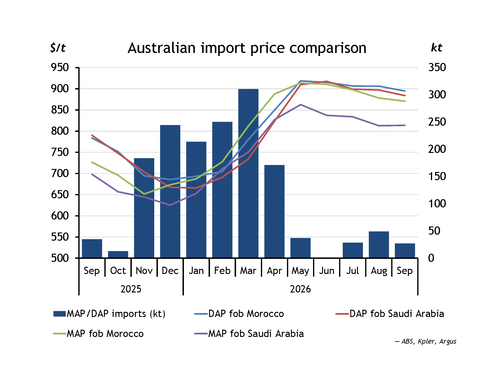
MAP prices have risen significantly since November buying last year. Argus last assessed MAP at $802-836/t fob Saudi Arabia, a 28pc increase from the start of November last year. (See chart)
The Middle East is not only a key source of fertilizer for Australia, but also accounts for a large proportion of the global sulphur supply, which is a key component in phosphate production. High sulphur prices have supported phosphate production costs.
Australia imported about 30pc of its MAP/DAP from Saudi Arabia via the strait of Hormuz in 2025, trade data from the Australian Bureau of Statistics (ABS) show.
With the ongoing price volatility, Australian farmers will remain cautious heading into the next buying season, National Farmers Federation told Argus on 22 September. Domestic sellers and buyers grew cautious earlier this year after a sudden drop in domestic urea prices left some market participants with high priced stock.
Farmers are also facing firm fuel prices and are watching these very closely, Grain Growers chief executive Shona Gawel told Argus on 22 September.
"At this stage, the issue is volatility rather than supply. Markets can react to geopolitical tension long before there are actual shortages, which can quickly affect fuel, freight and fertiliser costs," Gawel said.
Supply options
There is product available in the global market for Australian importers, but risks have increased in terms of pricing and timing, Western Australian importer CSBP said in a market update on 16 September.
Australia sources MAP/DAP from Saudi Arabia, Morocco, China and the US, ABS data show, but there are supply restraints on most of these origins.
Australian importers are considering western Saudi Arabian ports for fertilizer imports given the war has blocked off regular east coast trade. But the latest escalation of tensions around the Bab el-Mandeb has put more strain on this option. No vessels have been confirmed for this route, and Australia's last fertilizer import from Saudi Arabia arrived in late July, vessel tracking data from Kpler show.
Australia's MAP/DAP stocks remain sufficient to meet current prompt demand despite slower imports so far this year, market participants said.