The route to ‘35 by 35' raises big questions over energy mix and finance, writes Rhys Talbot
An emphasis on electrification goals at the upcoming UN Cop 31 climate summit could help grind out wins in a difficult geopolitical environment. It may also signal a decision not to deal with the thorny issues of fossil fuels and finance that have held up progress in climate talks for years.
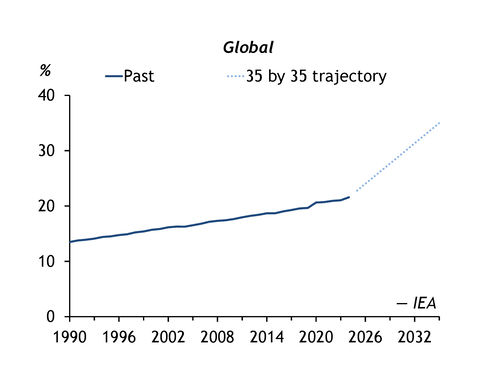
The Turkish presidency of Cop 31, to be held in Antalya in November, has made the "35 by 35" goal — increasing electricity's share of final energy demand worldwide to 35pc by 2035 — a central pillar of the conference's agenda. Electricity's share of final energy use sits at around 23pc now. The 12-percentage point increase the presidency wants is the same as the increase in the 45 years since 1981, when electricity made up 11pc of final energy consumption.
But different factors have converged in electricity's favour since then — not least costs and technologies. Solar panels have arrived en masse, while battery prices have fallen as energy density has soared, transforming electric vehicles from an expensive niche to a quarter of new car sales and rising, the IEA says. Grid operators have successfully integrated more intermittent and inertialess renewable generation into their mixes than was thought possible, although challenges remain — as last year's Iberian blackout showed. Meanwhile, fossil fuel crises and the grinding of the gears of international trade have made governments re-evaluate reliance on imported fuels.
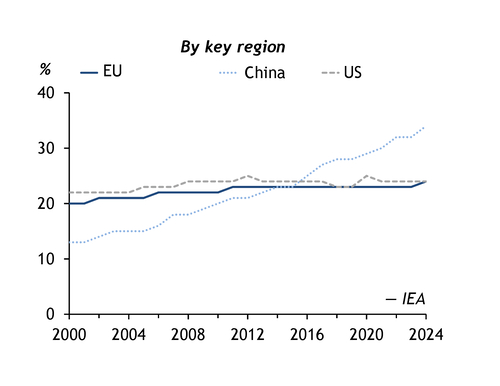
China and the EU are now convinced of the necessity of electrifying their economies to retain autonomy, in the face of limited domestic fossil fuel production. The former has made steady progress, while the latter has talked a good game, even if its electrification rate has grown a little in recent years (see graph).
But the 35 by 35 target fails to specify where the electricity would come from — fossil fuels or renewables, or both. Higher electricity consumption on the back of increased fossil generation would shift emissions from tailpipes to smokestacks, critics say, although the higher efficiency of electric end-uses compared with their fossil fuel counterparts could still drive a decline in the latter's use. And grid mixes can probably be greened over time more easily than liquid fuels or gas.
The Turkish focus on electrification does not directly touch fossil fuels, the main cause of global warming. Progress on the topic at Cops has stalled since parties agreed to transition away from fossil fuels in 2023. Electrification is not in itself a climate win — it only cuts emissions if it replaces fossil fuel consumption.
Follow the money
Renewable sources often have a lower levelised cost of energy than fossil fuel-fired plants. But counting whole-system costs — factoring in grid improvements and back-up generators for periods of low output — the price comparison becomes less favourable. And funding for developing countries, where power demand is growing the most, from developed countries has been a source of disagreement at climate summits for years. The 35 by 35 initiative sits in the "action agenda" part of Cop — voluntary discussions, carried on alongside the formal negotiations. The action agenda has grown in importance in recent years, as consensus has become harder to find in negotiated tracks.
But while finding agreement is easier when the targets are voluntary, driving action is not. Pushing electrification faster than the current rate will also require hard cash. Debt-laden developed countries have already drawn back on climate financing. Getting more out of them could well prove difficult. And insurgent right-wing parties, hostile to climate change action and international climate financing initiatives, threaten to sweep many European governments out of office in the coming years.