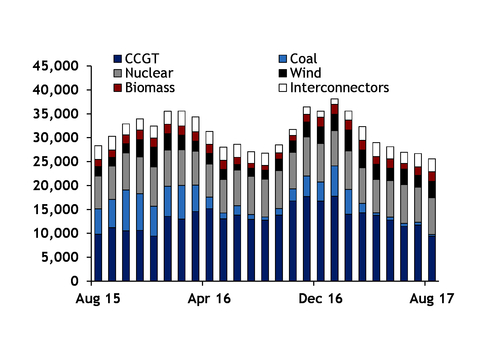
Muted demand for air conditioning and a strong supply contribution from distribution network-connected wind farms pulled power demand from the UK transmission network down to a new low last week.
Power system demand averaged only 26.2GW during all hours of the week beginning 31 July, which was down from 26.9GW during the previous week, and below the previous record low of 26.5GW from mid-August of last year.
Unseasonably low temperatures weighed considerably on cooling demand levels last week.
The average temperature in London turned out at only around 17.7°C, which compares with an average of 19.4°C during July and a long-term seasonal norm of around 18.5°C for the first week of August. And temperatures in the capital slipped to lows of around 10.6°C over the weekend of 5-6 August, which was the lowest they have been since mid-June.
The low temperatures coincided with strong wind power generation, with metered supply rising to an average of around 3.4GW, which was the highest it has been since early June.
And with embedded wind power capacity — which feeds its production directly into the local distribution networks — also supplying more, the share of demand that the wider transmission network had to meet was further cut.
The weak demand reduced the grid's call on thermal plants to operate last week and the UK's combined-cycle gas turbine plant fleet was only required to generate an average of around 9.5GW, compared with 12GW during July. This was the lowest amount gas-fired plants had produced over one week since early
And coal-fired units produced an average of just 390MW last week, which was only marginally above the 305MW all-time low. Only capacity at German utility Uniper's Ratcliffe-on-Soar and UK utility Drax's Selby based coal-fired facilities was required to operate over the course of the week.
UK power market prices reacted to the weak demand, with the N2Ex day-ahead base-load auction settling at an average of £39.67/MWh, compared with an average £40.82/MWh settlement during July.
Demand for power supply from the transmission network has fallen generally in recent years owing to sharp growth in the UK's embedded renewable generation capacity and improvements in the efficiencies of domestic appliances. System demand averaged around 31.7GW over the first seven months of this year, compared with 32.2GW over the same period last year and 33.6GW in 2015.
With weather forecasts showing expectations for daytime temperatures to remain below-average throughout the next two weeks, UK cooling demand will probably remain limited for the remainder of the summer.
But wind power generation has turned lower this week and is forecast to largely remain limited until at least mid-August, which should slightly increase the share of demand that the transmission network will have to meet.