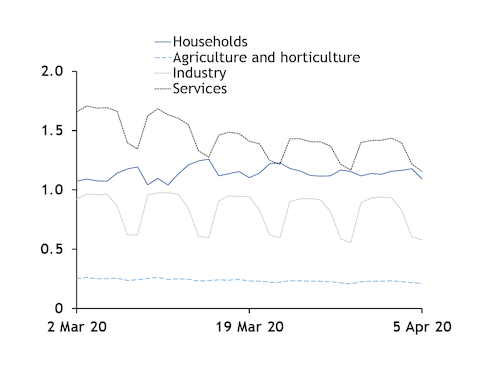
Total Danish power demand has fallen by about 7pc because parts of society have been closed to mitigate the spread of Covid-19, while decline rates in sectors such as culture and leisure, education and restaurants has been even greater, Danish transmissions system operator (TSO) Energinet said today.
Energinet reviewed electricity consumption data across several sectors in Denmark for the period of 2 March–5 April.
The services sector — which includes hotels, schools and culture entities — was the most affected, with demand declining by 15pc. And within the services sector, culture and leisure power demand fell by 45pc, education by 39pc and hotels and restaurants by 38pc.
The agriculture and horticulture sector saw demand fall by about 10pc, while industrial sector demand fell by about 4pc.
But household demand rose by more than 2pc due to increased numbers of people working from home, Energinet said.
The Danish government implemented lockdown measures on 12 March to help reduce the spread of the virus.
Denmark yesterday began the first phase of the gradual re-opening of society, which included the restarting of schools for specific age groups.
But lockdown measures for other groups in society have been extended.
The temporary closures of shopping malls, restaurants and leisure facilities and bans on events with more than 10 people were extended until 10 May. The temporary ban on major events was extended until 31 August. The Danish private labour market was requested to work from home since 13 March and dialogues between relevant business and employee organisations on future work arrangements going forward began on 14 April, the government said.