US feedstocks to make renewable diesel have risen to their highest prices of President Donald Trump's second term, buoyed not just by spiking prices in other energy markets but also by more supportive biofuel incentives.
All major US renewable diesel feedstocks hit their highest prices in more than two years this month, according to Argus assessments, tracking energy values that have surged as Iran responds to US-Israeli strikes by attacking Middle East energy infrastructure and restricting access to the strait of Hormuz. Costlier oil makes alternatives like biofuels more attractive.
But rising prices for animal fats and recycled cooking oil have also been driven in large part by biofuel policy, a signal that high prices could persist even if tensions in the Middle East ease. Front-month futures for soybean oil, a key renewable diesel input, have risen by 36pc so far this year, but unlike crude, most of those gains predate the war.
That's good news for feedstock suppliers — including the agribusiness giants investing in new soybean and canola crush capacity to meet renewable diesel demand — but not so good for industries like food manufacturing that compete with biofuel plants for scarce inputs. Renewable diesel refineries can stomach high feedstock costs when biofuel incentives are strong but could struggle to pay current premiums if policy underwhelms.
The Trump administration is potentially days away from finalizing biofuel blend mandates that have been proposed at record-high levels. The price of US credits generated from blending biomass-based diesel hit three-year highs earlier this month, supporting biorefining margins and signaling that traders expect supportive final quotas. US renewable diesel makers that cut output in 2025 and scheduled maintenance early this year are now raising production to meet demand, boosting feedstock costs in the process.
The administration has said it expects to finalize new mandates this month, and traders have taken a White House event to celebrate agriculture next week as another sign that the quotas both support farmers and could arrive any day. That event was scheduled early this month and has no explicit biofuel focus, but biofuel producers were invited, according to sources familiar with the planning.
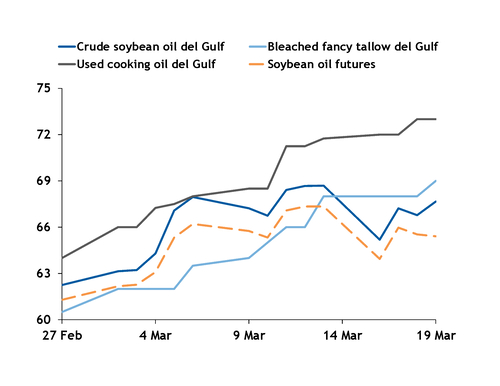
Bullish sentiment ahead of the release is showing up in delivered feedstock prices. While soybean oil futures are up 7pc since their February close, common feedstocks delivered to the US Gulf coast are up by more (see graph).
Used cooking oil delivered by rail or truck into the key biorefining region has risen by more than 14pc over the same time-frame to 73¢/lb, its highest since 2022. US tallow delivered by rail into the Gulf is likewise up by 14pc, partly because of a shrinking cattle herd and a labor strike at a major beef processing plant in Colorado.
These gains have not extended to global alternatives, with Chinese export prices for used cooking oil up modestly this year and Brazilian tallow slightly down.This too reflects policy: a US tax credit crucial for biorefining margins starting this year is limited to fuel from North American feedstocks, making imports less attractive. Producers outside the US, such as Canada's Braya, have scooped up cheaper imported used cooking oil in recent months as US buyers retreat.
But the current discounts could still appeal to US biorefineries looking for alternatives to pricey domestic options, especially coupled with fewer trade barriers after the Supreme Court struck down Trump's most expansive tariffs last month.
Trump has since reinstated a 10pc charge on most trading partners, though this represents a significant reduction for suppliers such as Brazil, which had faced a more than 50pc US tariff on its beef tallow. Tallow for export at Brazilian ports was last discussed at roughly 30pc below Gulf coast delivered prices, while Australian tallow was around 25pc lower, leaving room for viable trade even after accounting for tariffs.
Policy pitfalls
Plenty can still change in policy, with the final biofuel quotas still under White House review. Oil refiners that have swayed officials on issues like Jones Act waivers are warning that the cost to meet record biofuel mandates would spill into already-rising retail fuel prices. A plan to make larger oil companies blend more biofuels to offset program exemptions granted to their smaller rivals is a particular focus of last-minute lobbying.
Biofuel producers — popular in parts of the administration for soaking up demand for crops that otherwise depend on export markets — also see opportunity. A coalition of biomass-based diesel producers and feedstock suppliers wrote to Trump this week that strong biofuel mandates are one way to "counter global oil market disruptions".
Any rethink would only "exacerbate the recent spike in diesel fuel prices", argued the groups that include Clean Fuels Alliance America.