
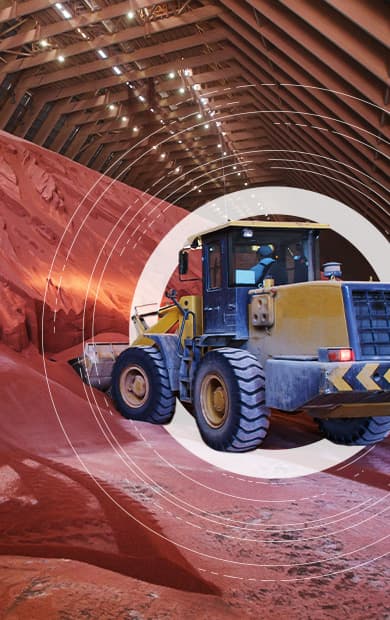
Potash
Overview
The potash market has been disrupted from its traditional trade flows and typically slow-moving price cycles, affected by new entrants, new mines, military conflicts and political tensions in countries that either produce or consume some of the largest quantities of potash in the world. The need for accurate insight and data is more acute than ever.
Our extensive potash coverage includes MOP, SOP and NOP. Argus has many decades of experience covering the potash market and we incorporate our multi-commodity market expertise to provide potash price assessments, analysis and data that provides the full narrative.
Argus support market participants with:
- Weekly potash price assessments, proprietary data and market commentary
- Short and medium to long-term forecasting, modelling and analysis of potash prices, supply, demand, trade and projects
- Bespoke consulting project support
Latest potash news
Browse the latest market moving news on the global potash industry.
Pakistan SOP producers cut rates on sulphur shortage
Pakistan SOP producers cut rates on sulphur shortage
Singapore, 13 April (Argus) — Pakistan's Mannheim SOP producers have cut run rates to 50-75pc from 80-90pc, driven by tight supply of sulphur from Iran on the back of the US-Iran war, according to producers. Around 0.6t of sulphuric acid or 0.2t of sulphur is needed to produce 1t of SOP using the Mannheim method. Manheim producers in Pakistan rely heavily on sulphur imports from Iran as feedstocks via cross-border trade, as domestic supply is insufficient to sustain demand. The US-Iran war has pushed delivered sulphur prices sharply higher. Indications for Iranian sulphur are now at $750-780/t cfr according to one importer. Domestic prices for sulphuric acid surged to 300,000 rupees/t ($1,077/t) from 100,000 rupees/t in February, before the war. Barket Fertilizers has operated at a reduced rate of 75pc since late March at its 50,000 t/yr plant at Port Muhammad Bin Qasim. The producer plans to ramp up production to full capacity on 15 April after securing sufficient feedstocks. Fellow producer Agven is operating at 50pc at its 20,000 t/yr Gwadar plant in April because of a planned turnaround that will last until end of the month. The producer has yet to decide whether to return to full rates as this depends on sulphuric acid price and availability. Other producers, including Suncrop and Akbari, are operating at 50-75pc at their 40,000 t/yr plant in Rahim Yar Khan and 20,000 t/yr plant in Bhikhi, respectively, because of feedstock supply tightness and firm prices. But lower run rates are unlikely to cause SOP shortages, as buyers could switch to buying more MOP. Domestic bagged granular SOP prices are now at 260,000-280,000 rupees/t ($934-1,005/t) ex-warehouse, and buyers are likely to move to granular MOP if prices rise further, one producer said. By Huijun Yao Send comments and request more information at feedback@argusmedia.com Copyright © 2026. Argus Media group . All rights reserved.
Indian government raises NBS for N, P, S
Indian government raises NBS for N, P, S
London, 8 April (Argus) — The Indian government has raised the nutrient-based subsidy (NBS) for nitrogen, phosphate and sulphur each by 10pc for the April-September kharif season, while holding the rate for potash steady . The NBS applies to phosphate and potash-based fertilizers including DAP, MOP and NPKs. It does not cover urea. The latest subsidy rates per nutrient are as follows: Rs47.32/kg for nitrogen Rs52.76/kg for phosphate Rs2.38/kg for potash Rs3.16.kg for sulphur The government has stated a tentative budgetary requirement for the season at 415bn rupees ($4.5bn), up by Rs43bn from the budgetary requirement for the 2025 kharif season. This raises the NBS for DAP to around Rs32,787/t ($355/t), and keeps the NBS for MOP at Rs1,428/t. Despite the rise in the subsidy, Indian DAP importers and producers would make a loss if receiving only the NBS and the maximum retail price of Rs27,000/t. Market participants expect the government to maintain the additional financial support for DAP importers and producers beyond the nutrient-based subsidy, but no official confirmation has yet emerged. By Tom Hampson Send comments and request more information at feedback@argusmedia.com Copyright © 2026. Argus Media group . All rights reserved.
Tessenderlo to buy Swedish SOP producer Cinis
Tessenderlo to buy Swedish SOP producer Cinis
London, 1 April (Argus) — Tessenderlo Kerley — part of Belgium-based chemicals company Tessenderlo — is to acquire Swedish SOP producer Cinis Fertilizer, which filed for bankruptcy in January. Tessenderlo will acquire Cinis' 100,000 t/yr water-soluble SOP plant in Ornskoldsvik. The value of the acquisition — expected to close this quarter — was not disclosed. Tessenderlo Kerley executive vice-president Geert Gyselinck said the acquisition "further diversifies our portfolio of production technologies". Tessenderlo produces SOP in Belgium using the Mannheim process, which requires MOP and sulphuric acid inputs. Cinis produces SOP using the glaserite process, which uses sodium sulphate and MOP as raw materials. Cinis started SOP production at Ornskoldsvik in May 2024. It delivered its first vessel cargo to Dutch speciality fertilizer company Van Iperen that September. Cinis has faced challenges since then, and has missed production goals . In April last year, it sought finance to boost production and for plant improvements. In October, it ditched output targets and asked for further funding, before pausing production in November. By Julia Campbell and Aidan Hall Send comments and request more information at feedback@argusmedia.com Copyright © 2026. Argus Media group . All rights reserved.
US Senate seeks reporting of weekly ferts sales data
US Senate seeks reporting of weekly ferts sales data
Houston, 20 March (Argus) — A bipartisan bill introduced in the US Senate on 19 March would require manufacturers and wholesalers of nitrogen, phosphorus and potassium fertilizer products to report prices and quantities weekly for public disclosure. The Fertilizer Transparency Act of 2026, introduced by senator Amy Klobuchar (D-Minnesota) and John Thune (R–South Dakota), would mandate the US Department of Agriculture (USDA) to collect and publish data on fertilizer prices, production volumes, and sales volumes from both domestic and foreign manufacturers and wholesalers selling into the US market. The identities of individuals and contract parties will remain confidential. "At a time when rising fertilizer costs and low commodity prices are continuing to erode farmers' profitability, we should be increasing price transparency for farmers in the current market," Klobuchar said. Weekly reports will include data for nitrogen, phosphorus and potassium. Prices and quantities for finished fertilizers, including urea and UAN, will also be reported. The data will clearly distinguish US-manufactured and imported products to ensure transparency around import reliance. Cooperatives and non-manufacturer retailers are exempt from mandatory reporting but may choose to report voluntarily and confidentially through a price survey and commercially available estimates, which will be published in the Agricultural Marketing Service. All information will be made publicly available to farmers and market participants, and will be published on a national and, where appropriate, statewide basis. Co-sponsors to this bill are senator Chuck Grassley (R-Iowa) and Tammy Baldwin (D-Wisconsin). The senators introduced a bill in September 2025 that direct the USDA to publish a comprehensive report analyzing trends in the US fertilizer industry to help farmers better manage input costs. Separately, senator Klobuchar, along with senator Roger Marshall (R-Kansas), introduced the Homegrown Fertilizer Act which would create a grant and loan program to expand domestic fertilizer production and improve fertilizer storage capacity, the US Senate Agriculture Committee said. By Sneha Kumar Send comments and request more information at feedback@argusmedia.com Copyright © 2026. Argus Media group . All rights reserved.

Argus Fertilizer Market Highlights
The complimentary Argus Fertilizer Market Highlights package includes:
• Bi-weekly Fertilizer Newsletter
• Monthly Market Update Video
• Bi-monthly Fertilizer Focus Magazine
Spotlight contents
Browse the latest thought leadership produced by our global team of experts.

Global Sulphur & Sulphuric Acid Market Dynamics & Impact of US-Iran Conflict
Global Sulphur & Sulphuric Acid Market Dynamics & Impact of US-Iran Conflict
Global DAP Market Dynamics & Outlook: Opportunities for Pakistan?
Global DAP Market Dynamics & Outlook: Opportunities for Pakistan?
European AdBlue & TGU markets: What’s shaping the outlook?
European AdBlue & TGU markets: What’s shaping the outlook?


Explore our potash products
Region and country focused market intelligence
Key price assessments
Argus prices are recognised by the market as trusted and reliable indicators of the real market value. Explore some of our most widely used and relevant price assessments.