


South Korea's planned merger of its five state-owned utilities is set to reshape its thermal coal procurement, paving the way for centralised purchasing, harmonised coal specifications and more flexible shipping operations, a Korean power sector official told Argus.
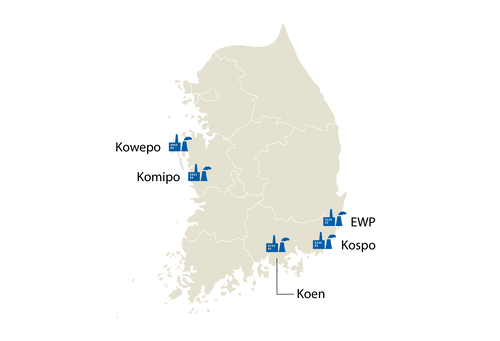
The five utilities are scheduled to merge on 1 October 2027 into a single entity, provisionally named Korea Power Generation, with a combined generating capacity of 53GW. Together, they account for about 83pc of South Korea's thermal coal demand and 89pc of its coal burn this year, according to Argus calculations.
A centralised coal procurement team could be established ahead of the merger to allow time to test the new purchasing system, although no firm decisions have been made on the timeline, the official told Argus.
The five generators currently procure coal independently, with price competitiveness a key priority as they compete with one another. But the merger could shift the focus towards supply security, as the combined entity would be responsible for coal supplies across all five generators' coal-fired plants.
Centralised procurement could also give the merged entity greater bargaining power through economics of scale, although some market participants have previously questioned whether larger purchasing volumes would necessarily translate into lower procurement costs.
The five utilities currently have different coal purchasing specifications, even for plants with similar boiler designs, sources familiar with the matter told Argus. The merger could help streamline these requirements where technically feasible, they added.
The merged entity is expected to take over existing coal supply and long-term consecutive voyage charter contracts, sources told Argus.
Greater flexibility in operations
The five utilities currently use 46 long-term chartered vessels combined, the official said.
These vessels primarily serve their respective utilities' power plants, but the merger could bring them under a single fleet, enabling last-minute optimisation of cargo allocation, shipping schedules and discharge ports based on individual plants' needs, the official added.
Greater flexibility in coal allocation could help the utilities manage inventories more efficiently, reducing the need for emergency purchases, according to sources.
The merger could also make it easier to transfer coal between coal-fired plants to address logistical disruptions or shortages. Such arrangements have been time-consuming under the current system, because of competing interests among utilities, market participants said.
Preparations for the merger are under way, with some beginning to exchange information on plant specifications and long-term vessel charters, the official said.
Strong leadership will be crucial to integrating the five utilities' operations, while the merged entity will need to balance fair representation from each company with the experience and expertise required to maximise the benefits of the merger, sources said.
Meanwhile, the South Korean government launched a merger preparatory committee on 30 September to oversee preparations for the planned merger of its state-owned utilities, according to climate and energy ministry Mcee.
"The goal is not simply to create a larger power company but a stronger energy company that can ensure a stable and efficient power supply while advancing carbon neutrality and energy security," Mcee said.
12102026041857.jpg)


