How the Iran Conflict Is Reshaping Gulf Coast Diesel Markets
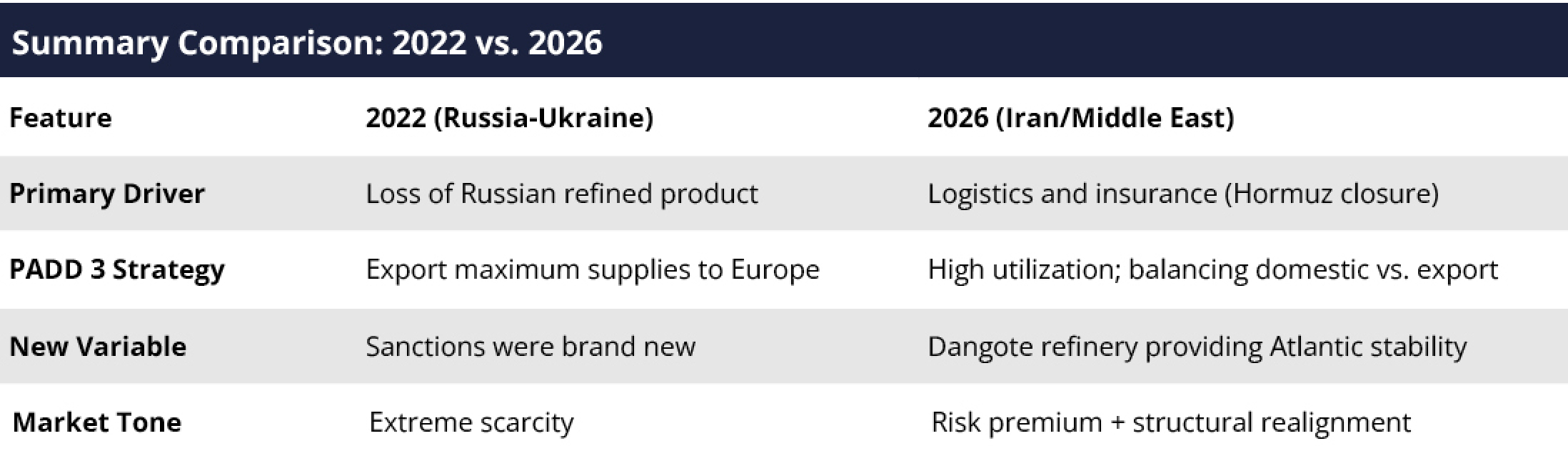
In light of the recent conflict in Iran, we have observed a significant rise in global distillate prices across all markets. Our focus here, however, is on the US Gulf coast distillate market. To begin with, let's examine the crack spreads — the difference in price between a barrel of crude oil and a barrel of finished product — in the Gulf coast, specifically comparing Argus GC 62g Pipe, the fungible ultra-low-sulfur distillate contract that ships up the Colonial Pipeline, with Argus WTI Houston. Since the start of Operation Epic Fury, Gulf coast ultra-low-sulfur distillate (ULSD) crack spread have reached a high of $66.64/bl. Although notable, that is not as elevated as the highs observed at the onset of the Russia-Ukraine conflict in 2022.
The key difference lies in the impact of Russian sanctions, which have significantly affected global diesel supply, which resulted in fears of a "dry" Europe and a drastic reduction in product moving from Russia to east coast South America, mainly Brazil. The “knock-on” effect of those disruptions has been a fundamental shift in US exports as Gulf coast refiners have pivoted to exporting as much diesel as possible to both regions simultaneously to fill the supply gaps.
Could we test the highs seen in 2022 if the current effective closure of the strait of Hormuz caused by the Middle East conflict continues for more than a month? Reaching those levels again is certainly within the realm of possibility but cannot be considered a forgone conclusion given the extreme volatility and unprecedented headline news sensitivity we’ve observed throughout the military operation to date. It is also important to note that global refining capacity is currently higher than it was in 2022, potentially limiting upside potential for crack spreads, even if outright prices remain at triple-digit levels, as they have over the past two weeks.

The strength in the crack spreads does not tell the full distillates story. Switching gears and looking at Gulf coast ULSD (62g) differentials to Nymex heating oil in the prompt market, we see different trends. As with crack spreads, Gulf coast differentials spiked in 2022 at the onset of the Russia-Ukraine conflict, but going into 2023 there was a significant drop in values that outpaced the downward movement of crack spreads, eventually normalizing to a range of -7.00 to -5.00¢/USG. Nigeria’s Dangote refinery coming on line affected the Gulf coast basis by displacing some of Europe’s diesel supply that previously came from Russia, despite Dangote’s added stability to the Atlantic basin being more a gasoline and naphtha narrative than it is a distillates story. At the highs seen since the beginning of the military operation against Iran, Gulf coast differentials were close to flat to Nymex heating oil, but those prices have since come under pressure, with the spread between April and May Nymex heating oil strengthening.
Another factor keeping Gulf coast ULSD differentials under pressure is the current cost of freight. Freight rates, and insurance in the strait of Hormuz and surrounding area, are significantly elevated as a result of Operation Epic Fury, with some routes seeing record high prices. The strait of Hormuz at the time of this writing remains effectively closed, disrupting the flow of crude and oil products globally.


Stay up to date with Argus analysis
For the latest news and insights from our teams into how this conflict is impacting the global energy and commodity markets, visit our topical hub.
Author: Argus Middle Distillate Business Development team