

All caps no substance: the EU's weakening grasp of gas market reality
Here we go again. Speaking to the European Parliament this week, Commission president Ursula von der Leyen floated the idea of subsidising or capping wholesale gas prices to shield households and businesses from the fallout of the Middle East conflict. “We must deliver relief now,” she said, calling for a “comprehensive look” at how to reduce people’s energy bills.
The instinct for politicians to point the finger at soaring gas prices at the benchmark TTF hub is understandable and well worn. EU governments are grappling with the consequences of a war that they did not start and are facing the uncomfortable question: how did Europe end up vulnerable all over again? In 2022, Russia’s sudden shut-off of most pipeline gas flows sent prices above €320/MWh at their peak, from a long-term norm of €10-20/MWh (see TTF history chart). Today’s crisis is different, but has echoes of the past — the Middle East conflict has pushed Iran to close the strait of Hormuz, a chokepoint for roughly a fifth of global LNG supply. Since the start of the conflict, Argus’ TTF front-month index has risen by nearly 80pc — still well below the 2022 peak, though.
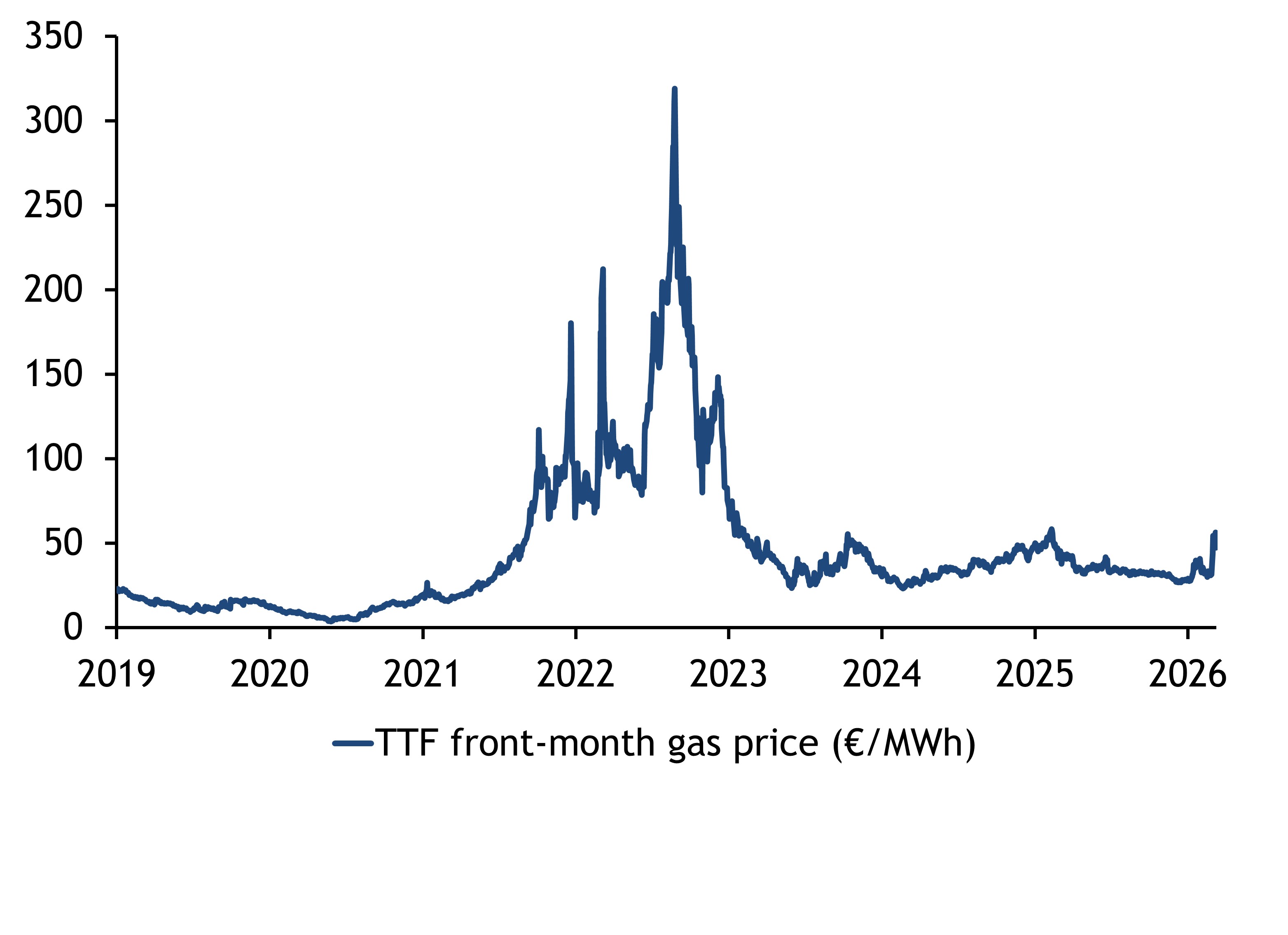
However, putting the blame on markets completely misses the point. We’ve been here before. In 2023, the commission eventually introduced a so-called “market correction mechanism”, which would trigger a wholesale price cap if the TTF moved above €180/MWh and disconnected by more than €35/MWh above an LNG reference price. The cap was never activated — by design, it was introduced after the peak of the crisis so prices were already much lower. The regulation quietly expired in 2025, to the relief of European gas traders.
Capping wholesale prices might play well politically. It creates the impression of decisive action. But the unintended consequences could threaten Europe's energy security for next winter, by handicapping its ability to compete on the international spot markets for LNG cargoes to rebuild its depleted underground gas stores — which are at their lowest levels for the time of year since 2022.
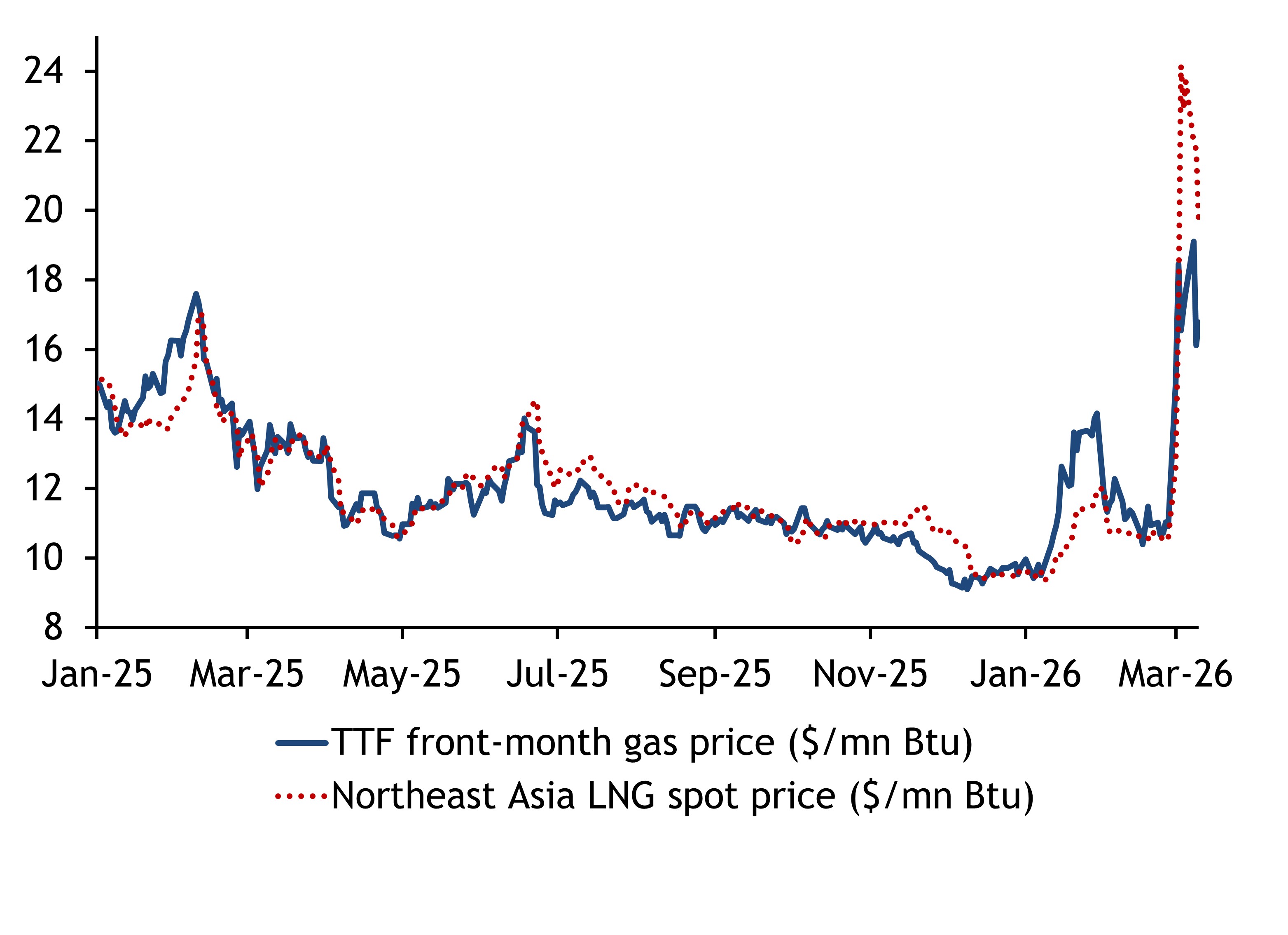
Europe is in a tug-of-war for LNG cargoes with Asia (see global gas prices chart). South Korea is looking to restart reserve coal-fired power stations; India is cutting gas supply to petrochemical plants and refineries; Bangladesh is at risk of being priced out entirely, as in 2022. This is the market doing what it’s supposed to do — ration scarce supply — and Europe needs to be able to compete in order to secure its gas.
If the EU caps prices, it risks blunting these signals. From a gas demand perspective, if the cap turns into a de facto subsidy which compensates buyers forced to import gas above the cap, it becomes an elaborate means to charge consumers for gas by the back door — funding higher prices through income tax.
A price cap would also threaten financial sector stability. Clearing houses could demand higher collateral from traders, stretching credit lines. Participants may migrate to less regulated, more opaque venues — reducing transparency and increasing volatility. And the uncertainty surrounding how a cap might be applied could itself suppress liquidity.
The commission also faces a “mechanism” problem. In 2022 it could pretend that LNG could act as a corrective mechanism to runaway TTF prices. No such opportunity this time around, since LNG is now the source of the problem. So it will most likely have to pick an arbitrary flat price figure for its cap, with no known way to compute what that figure should be. Such arbitrary caps have a long history in Europe, ever since Roman Emperor Diocletian in 301 CE tried to suppress inflation by capping the price of everything from slaves to ostriches. His efforts failed.
Europe needs to get ready for a potentially challenging winter by building up its gas storage buffer, and for that to happen, policy makers must do all they can to preserve independent price signals. Instead of applying artificial caps to trusted benchmarks, support might focus on policies for industries and consumers in the form of tax relief, or on making power grids more resilient and able to cope with rising renewable penetration, which will reduce Europe's reliance on gas in the long term.
Author: Natasha Fielding


