

Markets panic as war paralyses gulf oil and gas
The war in the Middle East has sent oil and gas prices blazing to their highest in years, and sent some spreads to the highest ever seen, as the worst-case scenario seems to be playing out: the strait of Hormuz has all but closed.
The strait of Hormuz has been off limits to commercial traffic since 1 March. The last tankers carried oil and liquefied natural gas (LNG) out through the strait on 28 February. If the strait reopens soon, markets may be able to smooth over the disruption. But every day that the strait stays closed makes that more difficult. If the strait stays closed for weeks or even months, it would lead to shortages in oil and gas markets across the world. Around 25pc of all oil consumed in the world each day passes through the strait, and likewise around 20pc of the world's LNG. Asia is the most directly exposed because around 80pc of crude oil and 90pc of LNG from the Mideast Gulf heads east. But Europe is exposed indirectly, being heavily dependent on imported energy. And around 70pc of Gulf jet fuel heads to Europe, covering 15pc of the jet fuel Europe consumes.
At least eight commercial vessels have been attacked in and around the Gulf this week. Qatar has halted LNG production. Iraq has cut crude oil production. At least three regional oil refineries have been struck by direct attack or drone debris. Many insurers have cancelled war risk cover for shipping, playing a large part in paralysing physical movements. China has told oil companies to stop all clean oil product exports, meaning gasoline, diesel, jet fuel and others. Trade around the rest of the world has taken on strange new shapes: Europe seems poised to export gasoline to Asia. But all-time-record freight costs on some routes threaten to delay the rest of the world in reallocating supply as it would like.
Traders are desperate for a clue as to how long this will last. President Donald Trump has said the war could last four or five weeks, but he has also said the US will take steps to restore and protect energy trade. Iran's president Masoud Pezeshkian said on 6 March that some countries had "begun mediation efforts", but Trump countered that there would be no deal without Iran's unconditional surrender.
Crude oil benchmarks have soared globally since the strait was closed. Dubai, WTI and North Sea Dated crude have all rallied by 20-30pc, or $15-20/bl, in the past week. Refined product prices and their spreads against crude have surged as well, because refiners in other parts of the world use Mideast Gulf crude to produce them, and traders in other parts of the world buy them from Gulf refiners. Jet fuel, diesel and naphtha are the most exposed.
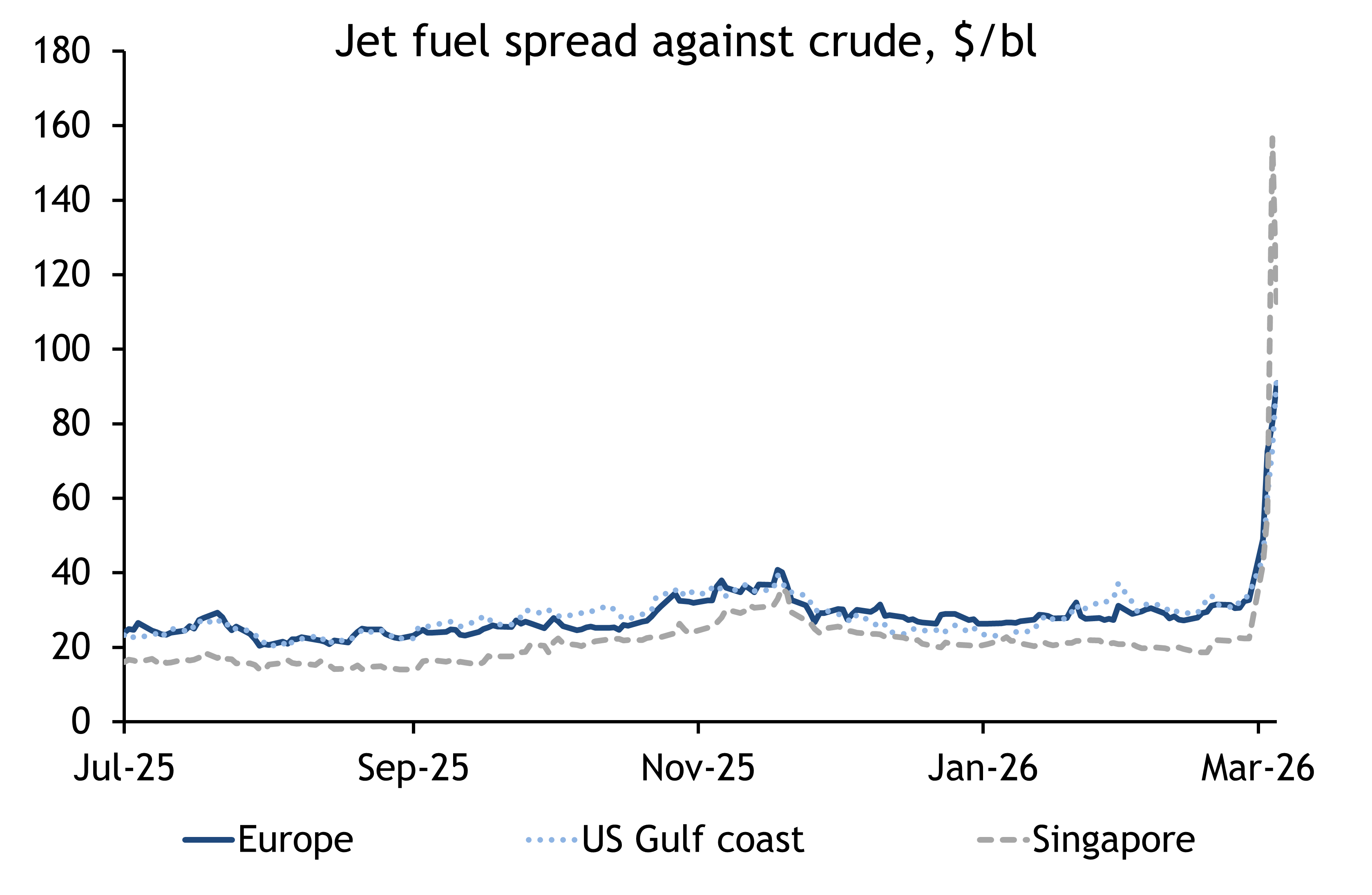
Traders have used all the superlatives and expletives in their vocabulary to describe the jet fuel swaps market, where prices have moved by as much as 10-20pc up and down within hours, and different brokers have quoted very different prices at the same time. European and Asian jet fuel has been pricing more than twice as high as crude, by far the highest premium according to Argus records. Many airlines hedge their price exposure as a matter of routine, but they usually leave some unhedged and they sometimes accept basis risk by using diesel or even crude derivatives for their superior liquidity.
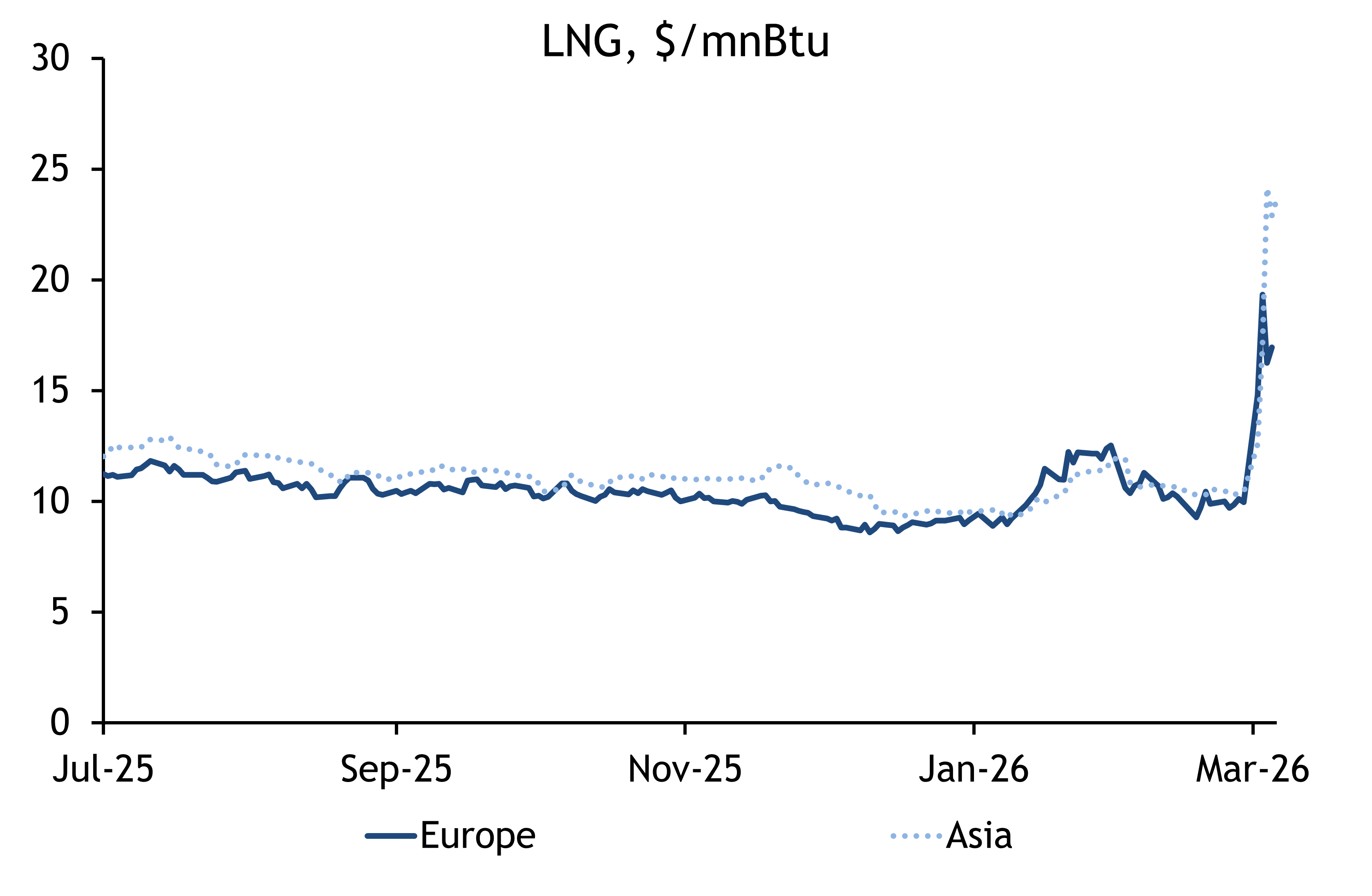
For gas, the problem is with LNG. That's only a small fraction of the gas the world consumes, but it's the most flexible supply logistically, meets marginal demand in Europe and Asia, and sets gas prices in Europe and most Asian countries. The Gulf provides around 20pc of world LNG exports. Benchmarks in Europe and Asia have rocketed in response to the disruption.
Asia is most exposed because the region takes around 90pc of Middle Eastern LNG. Asian LNG prices have soared above European prices, and the expectation of Atlantic-to-Asia exports has sent freight rates skyrocketing by over 600pc this week.
Biofuel prices have been much more stable than solely fossil fuel commodities because the Mideast Gulf does not export them in significant volumes. Biofuels now look a more competitive choice than usual relative to fossil fuel — and in the case of some marine biofuels, have even flipped to pricing below their fossil fuel counterparts. Sustainable aviation fuel (SAF) stands out as an exception with a rally alongside its fossil fuel counterpart, with traders concerned about potential supply tightening.
Authors: This blog was written with contributions from Argus oil, natural gas/LNG and biofuels editors Benedict George, Martin Senior, Helen Senior and Simone Burgin
Stay up to date with Argus analysis
For the latest news and insights from our teams into how this conflict is impacting the global energy and commodity markets, visit our topical hub.


