Argus Refinery Gate Values
Overview
Argus Refinery Gate Values (RGVs) represent the optimal value of a crude grade based on the market prices of refined products it can produce, dictated by the crude assay, minus the cost of processing and feedstocks. They are calculated using Argus' proprietary refinery model, which simulates operations to optimise product yields.
RGVs help stakeholders understand where a crude is most profitably refined, enabling smarter decisions across the supply chain.
The Argus Refinery Gate Values (RGVs) give a clearer picture of the potential value a refiner might extract from a specific crude slate, although they become truly powerful when combined with crude prices (from the Argus Crude Report) and freight rates (from the Argus Tanker Freight Report). Together, these three data sets enable you to calculate indicated refining margins, offering a more complete view than traditional market indicators such as crack spreads or netbacks.
In essence, RGVs are one part of a three-piece puzzle — crude, freight, and RGVs — that together unlock deeper insights into refining economics across different configurations and regions.
How to calculate refining margins:
RGV – (Crude Price + Freight Cost) = Indicative Refining Margin
Why Argus RGVs Matter
- Comprehensive Coverage:
Daily values of around 200 crude grades across five global refining regions (US Gulf coast, US west coast, northwest Europe, Mediterranean and Singapore) using simple and complex refinery models. - Data-Driven Decisions:
Built on the extensive library of crude assays and proprietary Argus product prices, freight rates and the PIMS refining model. - Daily Market Insight:
2,000 daily calculated RGVs help producers, refiners and traders identify the most lucrative opportunities.
Speak to a specialist
Key features

Dynamic Yield-Based Valuation
Updated daily around 200 crude grades across five global refining hubs

Argus proprietary data and prices
Argus product prices, freight and crude prices

Product integration
Users can integrate Freight and Crude pricing to calculate refining margins

Historical Data
RGVs data are available from January 2025

Flexible delivery
Access RGVs data using Argus Workspaces, Price Feeds or Third-Party Platforms
Customers that benefit
Crude Producers & Traders
- Identify the most lucrative markets for crude
- Strategically target exports
- Benchmark against competitors
Refiners
- Choose the best crude for your configuration
- Improve refining efficiency and profitability
- Access global RGVs for comparative analysis
National Oil Companies
- Adjust official selling prices competitively
- Position crude strategically in global markets
- Support policy and pricing decisions with data
How RGVs Are Calculated
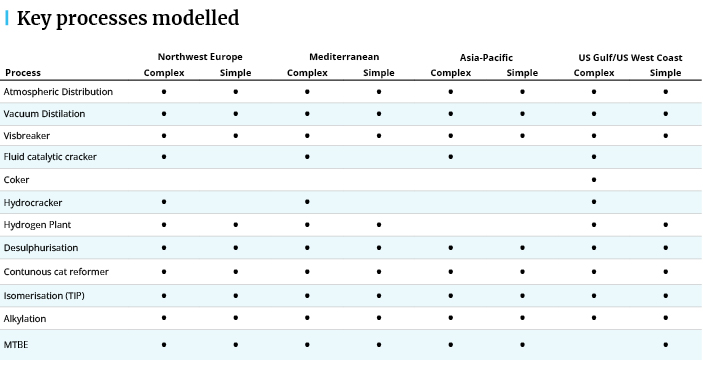
Argus uses a linear programming (Aspen PIMS) refinery model to simulate operations and optimise product yields. Inputs include:
- Spot product prices
- Refinery configuration constraints
- Crude assay data
Product specifications
The complex model has more units enabled e.g. FCC/ Hydrocracker/ delayed coker, thus able to produce more valuable product yields (gasoline, diesel, jet) and ultimately increasing the yield value/ RGV.