

Argus Crude
Overview
Argus Crude delivers independent daily price assessments, differentials, news and analytics across more than 100 internationally traded crude streams. From North Sea Dated and WTI to Dubai and ESPO, Argus reflects the physical market as it trades — applying region-specific methodologies to produce reliable, distortion-free assessments that producers, refiners and traders use in contracts, negotiations and commercial decision-making.
At a Glance
- Daily prices for 100+ crude streams globally
- Coverage across all major trading regions
- Physical market-reflective assessments
- Market news, analysis and deals done daily
- Daily refinery netbacks and forward curves
- Delivery via Argus Direct, data feed and API
Speak to a specialist
Key features

Global benchmark prices
Daily assessments cover more than 100 traded crude streams, including North Sea Dated, WTI, Dubai, Oman and ESPO Blend, each with differentials to the relevant regional benchmark.

Region-specific methodologies
Each assessment reflects the approach best suited to its market — from volume-weighted averages and bid/ask ranges in the North Sea to forward-linked pricing models in the Mideast Gulf.

Daily market news
Expert reporters publish same-day commentary identifying the drivers behind price movements across all regions, accessible via Argus Direct and the end-of-day PDF report.

Deals done table
Each daily report includes reported trades, bids and offers by grade, location, trade month, basis and volume — enabling subscribers to cross-check assessments against market activity.

Daily refinery netbacks
Simple and complex refinery netbacks for key crude grades across northwest Europe, Singapore and the US Gulf coast support crude selection and margin analysis.

Flexible data delivery
Prices, news and analysis are accessible via Argus Direct, end-of-day PDF, electronic data feeds, API integration and third-party data platforms.
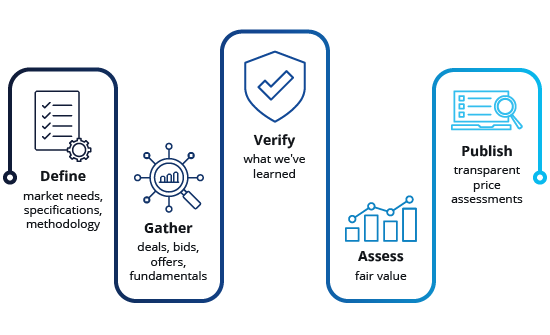
How argus assesses crude markets
- Market-reflective design
Methodologies mirror how each crude market trades, aligned to standard grades, volumes, locations and trading terms.
- Transaction-led assessments
Verified transactions take precedence over bids and offers, which in turn carry more weight than other market information.
- Wide market participation
Assessments draw on data from producers, consumers and intermediaries, gathered through active reporter engagement across all covered markets.
- Holistic and accurate pricing
All-day price collection ensures assessments reflect true market conditions.
- Defined specifications
Minimum volume, delivery timing, location and quality criteria determine which trades qualify for inclusion in each market's assessment.
Who uses this service
Producers
- Use Argus price assessments as reference in term contracts and official selling price calculations.
- Track daily differentials to benchmark grades across all key export regions.
- Monitor market commentary to understand the drivers behind movements in their crude values.
Refiners
- Evaluate crude offers against Argus assessments across competing grades and origins.
- Use daily refinery netbacks across northwest Europe, Singapore and the US Gulf coast to identify margin opportunities.
- Access deals done data to verify assessments and support procurement decisions.
Traders
- Identify arbitrage opportunities using daily price differentials across grades and delivery points.
- Track spread data across regions, including North Sea/Dubai, WTI/Brent and forward curves.
- Access same-day news and deals done to stay ahead of market-moving developments.
Analysts & Risk Managers
- Follow daily market commentary explaining the reasons behind global price movements.
- Access forward markets, intermonth spreads and historical price data for modelling and risk assessment.
- Monitor official selling prices and formula prices set by national oil companies across all major producing regions.
Frequently asked questions
Key price assessments
Argus crude price assessments are recognised as trusted indicators of spot market value. Published at frequencies that reflect each market's liquidity, they are used in contracts, official selling prices and commercial negotiations worldwide.