
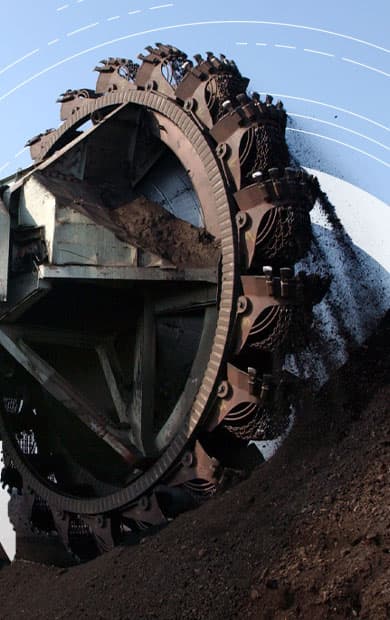
石炭
概要
欧州では、制裁措置により石炭の輸入先がロシアから他の供給国にシフトしています。電力ミックスにおける石炭の役割はピーク負荷用へとさらにシフトしており、今後のプランニングはより困難になっています。
アジア太平洋地域では、一般炭が電力・産業部門の柱であり続けています。世界の石炭貿易のフローと価格スプレッドは変化しており、主要供給国であるロシア、インドネシア、オーストラリア、南アフリカ、コロンビア、米国からのフローは、価格ダイナミクスと貿易障壁に対応して新しい市場に浸透しつつあります。
価格と市場動向を常に注視し、石炭市場が他のエネルギーやコモディティのベンチマークとどのように交差しているかを把握することが、今後数年間はより一層重要になってきます。
Latest coal news
Browse the latest market moving news on the global coal industry.
EU rules out reopening methane regulation
EU rules out reopening methane regulation
Brussels, 10 April (Argus) — The European Commission will offer "flexibilities", but will not amend or reopen the bloc's methane emissions regulation, although it will issue non-binding recommendations, it said. "We're not planning to reopen or amend the methane regulation. This would bring more uncertainty at this stage," commission energy spokesperson Anna-Kaisa Itkonen said. The regulation clearly states that implementation shall not endanger EU security of supply, she added. "This is obviously extremely important right now," Itkonen added. Commission officials are working on a recommendation to EU member states to ensure a simple system to demonstrate compliance, and a separate recommendation to ensure uniform and co-ordinated implementation of penalties that does not endanger energy security. "Non-binding recommendations are a helpful signal, but on their own they will not resolve the methane regulation's underlying design flaws, which are creating barriers for EU importers," Eurogas secretary general Andreas Guth told Argus . Consistent implementations across all 27 EU member states is not guaranteed and takes time, he added. EU refiners and fossil fuel importers last month warned that without changes to the regulation the EU would risk up to 43pc, or 114bn m³, of the bloc's 2024 gas imports and 87pc of crude oil imports, or 9.8mn b/d, based on 2024 volumes, being non-compliant in 2027–29. EU officials are in talks with refiners and importers, but declined to comment on industry projections that the methane regulation could lead to supply risk in 2027–29. "We fully support reducing methane emissions," IOGP Europe managing director Francois-Regis Mouton told Argus , adding that non-binding recommendations and guidance are not enough for legal certainty. Mouton called for the methane regulation to be paused while the commission proposes changes to simplify the regulation. Industry is expected to urge EU energy ministers to take action next week. By Dafydd ab Iago Send comments and request more information at feedback@argusmedia.com Copyright © 2026. Argus Media group . All rights reserved.
Indiana utility NIPSCO locks out 1,600 union workers
Indiana utility NIPSCO locks out 1,600 union workers
New York, 9 April (Argus) — US utility Northern Indiana Public Service Company (NIPSCO) has locked out 1,600 union workers, a move that could affect coal plant operations. NIPSCO locked out the workers on 2 April, after its labor contract with the United Steelworkers expired. The company and union began contract negotiations on 20 January but have yet to reach a new collective bargaining agreement, NIPSCO said on Wednesday. The lockout "will remain in place until the union agrees to the company's last, best and final offer and a new agreement is reached," NIPSCO said. The union says NIPSCO stopped negotiating after submitting its last offer. In addition, "we are not going to accept their last, best, and final offer because it was not in the best interest of our members," said Jon Doust, USW District 7 sub-district director. The affected workers hold a variety of jobs at NIPSCO, including linemen and clerical positions. Some members have positions at the utility's RM Schahfer coal- and natural gas-fired power plant. But the impact of the lockout on power plant operations could be delayed. Electricity demand in general is typically subdued during the so-called spring shoulder season months. This is particularly true for fossil fuel generation. April and May are months when US coal units are typically scheduled for maintenance outages. In addition to Schahfer, NIPSCO operates the Michigan City coal plant in Indiana, which the company is planning to close in 2028, as well as the Sugar Creek natural gas plant and some wind and solar generating facilities in the state. Maintenance at NIPSCO's coal power plants is ongoing but may be slowed by the lockout, Doust said, "or they are hiring even more contractors than they normally would to backfill the fact that we're locked out and not doing our part." The two coal units at the Schahfer plant are not producing any power at the moment, he said. NIPSCO said it has implemented continuity plans to maintain operations during the lockout. According to the utility, trained non-represented employees and contractors, with support from affiliated companies, are performing work in line with existing safety procedures. The utility is continuing to comply with a US Department of Energy (DOE) emergency order to keep Schahfer's coal units - 17 and 18 - available for generation dispatch if needed, NIPSCO said. Before the order the two units, which have a combined capacity of 848MW, had been slated to retire by the end of last year. Schahfer sells power into the Midcontinent Independent System Operator. Neither the grid operator nor DOE immediately responded to requests for comment. The Schahfer plant took 588,606 short tons (533,975 metric tonnes) of coal in all of 2025 and 95,216st in January 2026 from Peabody Energy's Gateway mine in Illinois, US Energy Information Administration data show. In January, the Schahfer plant burned 90,574st of coal. By Elena Vasilyeva Send comments and request more information at feedback@argusmedia.com Copyright © 2026. Argus Media group . All rights reserved.
EIA further lowers US coal power 2-year outlook
EIA further lowers US coal power 2-year outlook
Houston, 7 April (Argus) — The US Energy Information Administration (EIA) has further reduced its US coal-fired power outlook for 2026 and 2027, expecting coal to lose market share to upcoming renewable resource additions. The agency now projects domestic coal generation will total 680.5bn kWh this year and 657.5bn kWh in 2027, both of which would be down from 2025's generation of 732.7bn kWh, according to EIA's monthly Short-Term Energy Outlook released on Tuesday. Last month, EIA forecast 682.7bn kWh of coal power would be dispatched in the US in 2026 and 664bn kWh in 2027. Specifically, EIA reduced expectations for US coal generation in the first half of this year and in January-June 2027. EIA also lowered projections for overall US generation during some quarters of this year and next but still expects dispatch across the nation to rise by 1.2pc in 2026 and by 3.4pc in 2027. Coal's share of the US' generating fuel mix will fall to 16pc this year and 15pc in 2027 from 17pc in 2025. Coal bore the brunt of the decreases in heating demand at the start of this year, with coal-fired generation in January falling by 13pc, according to a previous EIA report. The agency estimated on Tuesday that coal generation for the first quarter as a whole dropped by 9.1pc from a year earlier to 175.7bn kWh. The reduced outlook for coal generation at least partly reflects planned coal plant retirements. EIA expects the nation's electric coal generating capacity to shrink by around 3.8pc this year. But some of that capacity may be kept on line at least into 2027. Last week, Wisconsin utility We Energies further delayed the retirement of the two remaining coal units at its Oak Creek power plant, extending operations beyond the end of this year and into 2027. In addition, the US Department of Energy continues to renew emergency orders issued at eight coal units that had previously been scheduled to retire last year, and retirement plans at other coal units scheduled to close in the next few years may also be subject to change. Still, EIA expects new renewable generating resources will displace at least a portion of coal's market share to meet the nation's increasing energy needs. The agency projects around 68.9GW of new solar capacity will come on line between 2026-27, and that solar generation will rise by 17pc this year and by another 21pc the following year. New wind and battery storage generating capacity also are expected to come on line in the US over the next two years. And EIA projects wind generation to rise on the year by 5.4pc in 2026 and by 6.8pc in 2027. US natural gas generation is expected to inch up to 1.704 trillion kWh in 2026 from 1.702 trillion kWh last year before rising to 1.777 trillion kWh next year. EIA projects US coal consumption will follow a similar downward trajectory as domestic coal generation, causing power plant inventories in the first half of this year to increase at a faster rate than they had a year earlier. From January-June, EIA expects electric power sector coal stockpiles to rise by 3mn short tons/month (2.72mn metric tonnes/month). In the same period of 2025, inventories grew by 2mn st/month. But by the second half of this year, coal inventories in the electric power sector are projected to grow by 1mn st/month, aligning with the rate in July-December 2025. By the end of the year, US power plants are expected to hold around 119.9mn st of coal on site, up from the 109.5mn st stockpiled at the end of last year. Inventories are projected to continue to edge up to 123.7mn st by the end of 2027. On the international side, the agency's outlook for coal shipped out of the US to seaborne destinations was little changed from its report in March, when it said that sustained disruptions to shipping through the strait of Hormuz and to global LNG trade might lift coal exports. EIA currently expects thermal coal exports to rise to 44.6mn st in 2026, up from from 42.5mn st last year, before sliding to 43.4mn st in 2027. US metallurgical coal exports will increase to 53.4mn st this year and 54.2mn next year from 50.1mn st in 2025, the agency projected. Last month, EIA expected US steam coal exports to total 43.8mn st in 2026 and 43.6mn in 2027, and metallurgical coal exports were projected at 53.5mn st this year and 54.5mn st next year. By Anna Harmon Send comments and request more information at feedback@argusmedia.com Copyright © 2026. Argus Media group . All rights reserved.
India coal auction prices rise on seaborne volatility
India coal auction prices rise on seaborne volatility
Singapore, 6 April (Argus) — Premiums at India's domestic coal auctions rose sharply in March with industrial buyers moving to secure supply following a surge in seaborne coal prices and freight rates, led by the US–Iran conflict and pre-summer restocking by power utilities. State controlled Coal India (CIL) — which meets about three-quarters of India's coal needs — recorded an average premium of 45pc in its March electronic auctions over the notified prices applied to long-term contracted sales, it said last week. This compares with an average premium of 35pc in February. Meanwhile, the overall average premium stood at 38pc for the April 2025-March 2026 financial year. The rise in premiums reflects the rising cost of imports, prompting buyers to actively seek domestic coal sold through spot electronic auctions, also known as single window mode agnostic e-auctions. These auctions accounted for 14pc of CIL's sales in the previous financial year. Coal and petroleum coke prices, along with freight rates, have risen sharply following supply-demand imbalances, amplified by geopolitical tensions in the Middle East. Argus assessed Indonesian GAR 4,200 kcal/kg coal at $59.51/t fob Kalimantan on 2 April for Supramaxes, up by about 10pc from $54.31/t on 27 February, just before the tensions escalated. Prices have also risen by 33pc from $44.91/t at the start of the year. Newcastle NAR 5,500 kcal/kg coal rose by 1.9pc to $87.59/t fob on 2 April, compared with late February and is up by 24pc since the beginning of the year. South African NAR 5,500 kcal/kg coal was assessed 7.4pc higher at $96.11/t fob Richards Bay on 2 April compared with that of 27 February, with prices 31pc higher on a year-to-date basis. Indian utilities typically import Indonesian coal that meets technical parameters of most coastal power plants. Delhi has already asked all thermal power utilities to prepare for a harsher summer . Meanwhile, India has directed private-sector utility Tata Power to restart its 4GW imported coal-fired utility in western Gujarat state . Sponge iron producers prefer coal from South Africa with a high fixed carbon content, while cement makers prefer petroleum coke, and switch to coal during price surges. Cfr India 6.5pc coke was assessed 24pc higher since the start of the war at $160/t on 1 April. The prices are also up by 36pc on a year-to-date basis. Currency volatility has added to landed costs. The Indian rupee averaged at 92.90 rupee to a dollar in March, compared with Rs90.76 in February. It has slipped further to Rs93.46 so far in April, implying additional cost in rupee terms. But coal auctions are priced in rupees, shielding buyers from foreign exchange swings. Auctions Among CIL's subsidiaries, Northern Coalfields recorded the highest March auction premium at 80pc, followed by South Eastern Coalfields (SECL) at 70pc and Eastern Coalfields at 48pc. Individual auction results show a 25-171pc premium growth over the notified price. The highest growth in premium was for a G10 or GAR 3,100-3,400 kcal/kg domestic coal from SECL's Amadand mine, with a deal closing at Rs3,682/t free on rail/road (for) basis, up by 171pc above its notified price. The coalfield also achieved a 45pc premium over the notified price, selling a G6 or GAR 4,200-GAR 4,400 kcal/kg coal at Rs4,014/t on for basis — the domestic market equivalent of fob prices. The prices are still sharply lower than international fob and delivered coal prices. Single window auctions are dominated by industrial buyers, but some independent power producers also participate for small spot volumes. Utilities rely primarily on long term CIL contracts or linkage auctions. Sponge iron, cement costs rise The domestic coal blend in sponge iron production has risen to about 80pc from 30-40pc earlier in key industrial hubs, with some non-integrated units switching entirely to domestic coal to protect margins. Rising auction premiums have pushed up production costs, raising sponge iron prices in key centres like Raipur by 5-7pc, according to Anil Nachrani, president of the Chhattisgarh Sponge Iron Manufacturers' Association. Cement producers are also feeling the impact. The cost of NAR 4,000 kcal/kg coal parcel bought in the auction has risen by 11pc to about Rs8,000/t for delivering the cargo to the plant, increasing per unit energy costs from Rs1.60/unit to Rs1.85/unit, a cement company official said. But the prices are still cheaper compared with Rs2.40/unit on the basis of $150/t cfr price of buying NAR 6,900 kcal/kg Northern Appalachian or NAPP coal. If this uncertainty in the seaborne market prolongs, the premium will increase further, raising the cost of production and potentially cement prices, another cement company official said. By Saurabh Chaturvedi and Ajay Modi Send comments and request more information at feedback@argusmedia.com Copyright © 2026. Argus Media group . All rights reserved.
Spotlight content
Browse the latest thought leadership produced by our global team of experts.

Spotlight content
Browse the latest thought leadership produced by our global team of experts.


Explore our coal products
Real time access to trusted price assessments, indexes, global market intelligence, analytics and outlooks for European, Asia-Pacific, Americas and African coal markets.
主な価格査定
アーガスの価格は、実際の市場価値を知る、信頼できる指標として市場で認められています。最も広く利用され、関連性の高い価格査定の一部をご覧ください。

