Overview

Markets worldwide are trying to understand the implications of the conflict, and Argus is here to help. With our comprehensive news coverage and tailored, insightful analysis, we can help you make sense of the latest developments and understand what the conflict means for the energy and commodity markets that matter to you most.

Bookmark this page for the key developments as they unfold

Latest news on the Middle East conflict

Read the latest news stories as they are published.

Latest news
26/03/25

US issues waiver to allow E15 gasoline: Update

US issues waiver to allow E15 gasoline: Update

Updates throughout New York, 25 March (Argus) — The US will allow refiners and retailers to supply a gasoline blend with more ethanol than is usually allowed in some states, starting in May, and will waive other fuel rules, amid efforts to temper pump prices that have surged because of war in the Middle East. The Environmental Protection Agency (EPA) on Wednesday issued emergency waivers allowing continued nationwide sales of gasoline with up to 15pc ethanol (E15), administrator Lee Zeldin announced Wednesday in brief remarks at the CERAWeek by S&P Global conference in Houston, Texas. The typically cheaper blend would have otherwise been restricted in much of the US during the summer because of rules to limit smog that do not apply to typical E10 gasoline despite a similar volatility profile. The waivers also standardize blending rules across the US, reducing the risk of price spikes in areas where boutique rules can create fuel islands. The agency said this would help create more of a "single national gasoline pool" this summer. For instance, EPA is allowing continued sales of E10 this summer in a group of Midwestern states that would have otherwise required that blend to be mixed with less volatile but costlier blendstocks. Governors of those seven states had asked for that carveout after war in the Middle East broke out. The agency will also suspend federal enforcement of requirements for other regions of the US to switch to similarly low-volatility "boutique" gasoline fuel blends this summer. California and major metro areas such as Denver, Colorado make the switch each year as part of federally approved plans to comply with national air quality standards. It will be up to states and local jurisdictions to decide whether to maintain those specific standards, the agency said. "Through the waiver, we are fortifying the domestic gasoline supply chain and providing Americans relief at the pumps ahead of the upcoming summer driving season," Zeldin said. EPA can issue emergency waivers in "extreme or unusual" fuel supply situations that last 20 days and will have to be renewed to last through the summer. The Wednesday announcement weeks ahead of the start of the summer driving season comes after oil refiners lobbied President Donald Trump's administration to clarify its summer plan s sooner than in years past. The first round of emergency waivers last year came just days before summer driving season kicked off, frustrating fuel makers and distributors that had already invested millions to move to the boutique Midwestern blend. Pipelines too start moving to summer blends well before fuel reaches motorists. Fight in Congress continues While EPA has issued emergency waivers allowing continued E15 sales for the last four years, ethanol advocates cheered the announcement. "With rising fuel prices and a war in the Middle East, this is the worst time to force retailers to bag E15 pumps," said Iowa Renewable Fuels Association executive director Monte Shaw. But they also pushed Congress to find a more durable solution that does not depend on regulators. Congress has struggled for months to reach agreement on biofuel policy legislation that would permanently adjust air quality rules to allow E15 sales year-round. Some refiners have objected to earlier proposals that would restrict their ability to win exemptions from biofuel blend mandates. Lobbyists close to the debate say there is disagreement in Congress over whether to continue pushing for far-reaching biofuel legislation that limits those exemptions or a slimmer E15 bill instead. Senate Agriculture Committee chair John Boozman (R-Arkansas) said at an event in Washington, DC on Monday that he supports E15 but that restricting exemptions could lead small refineries, including one in his state, to close. Ethanol is typically cheaper than gasoline blendstocks, and the spread has widened since Tehran has retaliated against US-Israeli strikes by attacking energy infrastructure and halting tanker traffic. At the same time, E15 is not sold at the vast majority of retail fuel stations in the US, limiting the role the biofuel can play in curbing pump prices without other changes. Farm advocates blame the lack of availability on the long-running impasse in Congress deterring retailers from investing in higher-blend infrastructure. EPA is separately planning to finalize new biofuel blend quotas, which shape production margins for ethanol and demand for crops like corn, sometime this month. By Cole Martin and Eunice Bridges Send comments and request more information at feedback@argusmedia.com Copyright © 2026. Argus Media group . All rights reserved.

Latest news

Iran rejects US proposal for peace talks: state media


26/03/25
Latest news
26/03/25

Iran rejects US proposal for peace talks: state media

Dubai, 25 March (Argus) — Iran has rejected a US proposal that was due to form the basis for negotiations later this week aimed at ending the war, according to Iranian state news agency Press TV. An unnamed senior security official told the outlet that the US proposal was both "excessive" in its demands and "deceptive", drawing parallels with two previous rounds of talks in which Israel and the US attacked Iran mid-negotiation. In both cases, the US had "no genuine intention" of engaging in meaningful dialogue, the official said, referring to talks in June 2025 and February 2026. The US proposal was delivered to Tehran by a friendly regional intermediary, Press TV said. This followed US president Donald Trump's claim on Monday that his administration had held positive conversations with unidentified Iranians. A day later, Trump said those same Iranians had sent him a "significant prize" related to "oil and gas" and to flows through the strait of Hormuz. Several Iranian officials have since denied that any negotiations have taken place with Washington since the war began on 28 February. Iran's foreign ministry also denied that talks had occurred, but confirmed that Tehran had received messages "from some friendly countries regarding the US demand for negotiations to end the war". The war will end "when Iran decides to do so, and when its own conditions are met", the Iranian security official told Press TV. Iran will continue to inflict "heavy blows" on its enemies until those demands are met, they said. Press TV gave no detail on what the US "excessive" demands involved, but listed five Iranian conditions for ending the war. These include a "complete halt to aggression and assassinations by the enemy", the creation of "concrete mechanisms" to prevent conflict being reimposed on Iran, and a "guaranteed and clearly defined" structure for paying war damages and reparations. Iran also called for the cessation of attacks on all "resistance groups" in the region — including Lebanon's Hezbollah, Gaza-based Hamas and Yemen's Houthi movement — and for acceptance of Iran's continued sovereignty over the strait of Hormuz. A ceasefire is contingent on Washington accepting all of Iran's conditions, the official said. "No negotiations will be held prior to that. The end of the war will occur when Iran decides it should end, not when Trump envisions its conclusion." By Nader Itayim Send comments and request more information at feedback@argusmedia.com Copyright © 2026. Argus Media group . All rights reserved.

Latest news

Mideast Gulf gasoline crunch ripples into east Africa


26/03/25
Latest news
26/03/25

Mideast Gulf gasoline crunch ripples into east Africa

Dubai, 25 March (Argus) — Disruption affecting gasoline exports from the Mideast Gulf is already spreading to key import markets from Pakistan to east Africa, and could worsen if cargo delays and higher freight rates make prompt cargoes harder to secure. Higher procurement costs — driven by shipping-related disruption since the start of the US-Iran war — are beginning to cast doubt on prompt gasoline arrivals into key import markets. Pakistan remains highly exposed to any prolonged disruption around the strait of Hormuz, which handles nearly 70pc of its gasoline imports, although officials said stocks "remain at comfortable levels". In Kenya, the near-term picture appears more steady. The country's petroleum cabinet secretary Opiyo Wandayi told Argus that its contractual volumes under government-to-government (G2G) arrangements with the Mideast Gulf's national oil companies (NOCs) remain on track. State pipeline operator KPC holds 102mn litres of gasoline, enough to meet the country's stockholding requirement, while a further 330mn l are scheduled for delivery toward the end of April, the minister added. "We are confident our G2G arrangement is robust enough to manage any near-term uncertainties". the minister said. While contracted cargoes are still arriving, Kenya remains vulnerable to any prolonged disruption in the Mideast Gulf, which supplied more than half of its gasoline requirements in 2025. Suppliers are still trying to move cargoes into the region, with some European gasoline being redirected there. The STI Park , a 90,000t vessel, is expected to arrive at the port of Mombasa in mid-April, while the LR2 STI Selatar is due to arrive around the same time with about 75,000t of gasoline loaded from Antwerp. But signs of strain are emerging, with local media reporting long queues at filling stations and dry pumps in parts of Nairobi, confirmed by at least two local sources. "Many retail stations are running dry because the higher cost of March cargoes is not yet reflected in the current regulated pump price, prompting oil marketing companies to curb wholesale sales and leaving independent retailers struggling to secure fuel", the head of Kenya's Petroleum Outlets Association, John Njogu told Argus . The Kenyan government has kept maximum pump prices for gasoline, diesel and kerosine unchanged for the 15 March-14 April review period. In Tanzania, another key buyer of Mideast Gulf gasoline, delivery windows for cargoes scheduled for April have already begun to shift, even though the cargoes were ordered around two months in advance before the war, according to the executive director of the Tanzania Association of Oil Marketing Companies, Raphael Mgaya. While the impact on supply security remains unclear, he warned that local prices could rise by at least 70pc if disruption persists, leaving "oil marketing companies short of working capital". "That could make it harder to open letters of credit on time, pushing cargoes into third-party storage under financial hold and adding interest, storage charges and penalties", Mgaya said. Pressure is also building in Pakistan, with reports from the state-run Associated Press of Pakistan showing long queues at fuel stations in Karachi, while the government said rising global prices are increasing import costs and straining letters of credit. Pakistan's state-owned PSO has already seen the impact in its latest tender, where Mideast Gulf refiners offered cargoes at a record $17-19/bl premium, compared with roughly $5-7/bl premiums before the conflict, suggesting prompt replacement barrels are becoming both more costly and harder to secure. By Rithika Krishna and Aldric Chew Send comments and request more information at feedback@argusmedia.com Copyright © 2026. Argus Media group . All rights reserved.

Latest news

US doubling down on oil during crisis


26/03/25
Latest news
26/03/25

US doubling down on oil during crisis

Houston, 25 March (Argus) — Faced with the greatest disruption to global oil and gas supply in history, President Donald Trump's administration is doubling down on support for fossil fuels and criticism of the energy transition. Energy transition policies under Trump's predecessor Joe Biden were actually "energy subtraction", interior secretary Doug Burgum told CERAWeek by S&P Global in Houston on Wednesday. "We need energy addition." Trump's policies "means unleashing all of you", said Burgum to the gathered energy industry crowd. "It means cutting red tape. It means lowering taxes, getting rid of crazy regulations that are not saving the planet. They're just impeding and hurting certain forms of energy." Burgum made his first appearance at CERAWeek on 23 March to celebrate a deal forcing TotalEnergies to drop plans for offshore wind farms along the US east coast and invest in oil and natural gas production instead. Burgum that day justified the administration's opposition to offshore wind farms by their supposed national security risks highlighted during the war in Iran — the wind turbines are so large that they could mask enemy drones attacking the US mainland, Burgum claimed. On Wednesday, Burgum denounced his Democratic predecessors for "weaponization of regulation to try to drive this climate fantasy about transition". What crisis? Speaker after speaker at CERAWeek discussed impacts from the Mideast Gulf crisis , which cut off roughly 20mn b/d of oil from global supply since the start of the war. Executives from Kuwait and the UAE issued particularly dire warnings about grave consequences from Iran's continued control of the strait of Hormuz. Burgum on Wednesday responded to those concerns by suggesting that a peaceful resolution to the war was imminent. "We are hearing the reports, publicly reported, that there is a dialogue going on" with Iran, Burgum said. "I think that people are encouraged about that". Trump said on 23 March that his administration was talking to as-yet unidentified Iranians, and on Tuesday, he said that those Iranians had sent him a "significant prize" related to "oil and gas" that is connected to flows through the strait of Hormuz. Iranian leaders, including parliament speaker Mohammad Bagher Ghalibaf have since denied any negotiations with the US are taking place. Tehran highlighted its control of the strait of Hormuz on Wednesday by saying it will allow some "non-hostile" vessels to pass through the waterway, if they comply with regulations. The US military action against Iran was necessary to make the world safer by "lowering the risk premium that I think was missing from the market, because maybe the market wasn't recognizing the risk," Burgum said. Burgum likely was referencing a research paper the White House circulated on 17 March that argued that Iran's ability to affect the flow of energy commodities from the Mideast Gulf added up to $15/bl to global oil prices above the fundamental values. The paper at the same time argued that the premium was "not structurally embedded in oil markets" because market participants had failed to appreciate that geopolitical risk. By Haik Gugarats Send comments and request more information at feedback@argusmedia.com Copyright © 2026. Argus Media group . All rights reserved.

Latest news

US plans to allow E15 gasoline this summer


26/03/25
Latest news
26/03/25

US plans to allow E15 gasoline this summer

New York, 25 March (Argus) — The US is planning to allow refiners and retailers to supply a gasoline blend with more ethanol than is usually allowed in some states in the summer, an effort to temper fuel costs that have surged because of war in the Middle East. The Environmental Protection Agency (EPA) is expected to soon issue emergency waivers allowing continued nationwide sales of gasoline with up to 15pc ethanol (E15), a blend typically restricted in the summer because of rules to limit smog, according to four people familiar with the plans. Most gasoline in the US is sold with 10pc ethanol, but higher-ethanol blends are typically cheaper. Clarity on the agency's plans is expected on Wednesday. EPA administrator Lee Zeldin was to address the CERAWeek conference in Houston, Texas, on Wednesday afternoon with an announcement "regarding nationwide E15 and E10 to boost energy supply and provide cost relief to Americans", according to a media advisory. EPA said that it was working to restore "American energy dominance" and was "monitoring the supply with industry and federal partners". EPA has issued emergency waivers allowing summertime E15 the past four years, citing "extreme or unusual" fuel supply issues. President Donald Trump's administration has more recently looked for ways to minimize the impact of war in Iran on US drivers. Last year's waivers also allowed continued sales of typical E10 gasoline in a group of Midwestern states that would have otherwise required that blend to be mixed with less-volatile but costlier blendstocks. Governors of those seven states, hoping to again halt their shift to the boutique blend that would leave them in a regional fuel island, have asked for similar treatment this year. Oil refiners have pushed EPA to clarify plans sooner than in years past. The first in a series of 20-day waivers last year came just days before summer driving season kicked off, frustrating fuel makers and distributors that had already invested millions to move to the boutique Midwestern blend. The focus on emergency waivers comes as a task force of Republican lawmakers in Congress has struggled to reach agreement on biofuel policy legislation that would permanently adjust air quality rules to allow E15 sales year-round. Some refiners have objected to earlier proposals that would restrict their ability to win exemptions from biofuel blend mandates. Lobbyists close to the debate say there is disagreement in Congress over whether to continue pushing for far-reaching biofuel legislation that limits those exemptions or a slimmer E15 bill instead. Senate Agriculture Committee chair John Boozman (R-Arkansas) said at an event in DC on Monday that he supports E15 but that restricting exemptions could lead small refineries, including one in his state, to close. By Cole Martin Send comments and request more information at feedback@argusmedia.com Copyright © 2026. Argus Media group . All rights reserved.

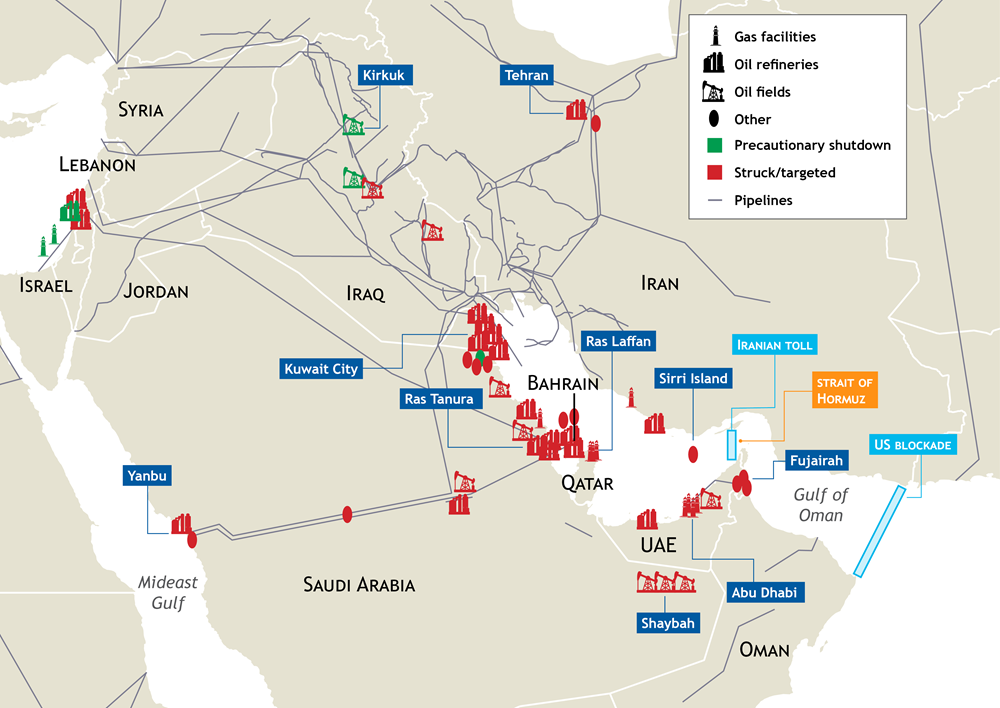
Mideast Gulf export infrastructure

Mideast Gulf export infrastructure