
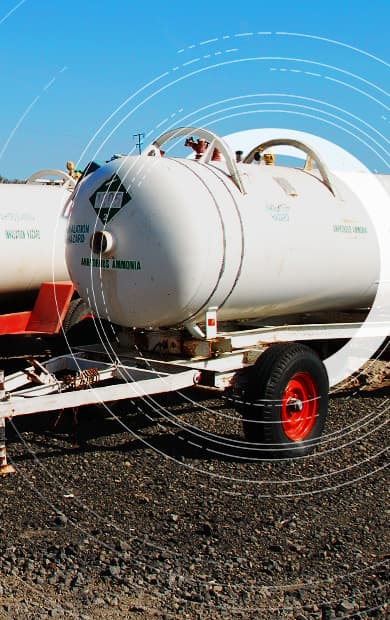
Ammonia
Market moving insight on clean and conventional ammonia – delivering robust price assessments, actionable commentary, powerful data, vital analysis and outlooks
Overview
The ammonia market is undergoing a period of rapid and dramatic change. Conventional or ‘grey’ ammonia is traditionally produced almost exclusively for its nitrogen content. However, the urgent need to decarbonise the global economy and meet ambitious zero-carbon goals has opened up exciting new opportunities.
Ammonia has the potential to be the most cost-effective and practical ‘zero-carbon’ energy carrier in the form of hydrogen to the energy and fuels sectors. This has led to rapid growth of interest in clean ammonia and a flurry of new ‘green’ and ‘blue’ ammonia projects.
Argus has many decades of experience covering the ammonia market. We incorporate our multi-commodity market expertise in energy, marine fuels, the transition to net zero and hydrogen to provide existing market participants and new entrants with the full market narrative.
Our industry-leading price assessments, powerful data, vital analysis and robust outlooks will support you through:
- Ammonia price assessments (daily and weekly), some of which are basis for Argus ammonia futures contracts, Ammonia forward curve data and clean ammonia cost assessments and modelled weekly prices
- Short and medium to long-term forecasting, modelling and analysis of conventional and clean ammonia prices, supply, demand, trade and projects
- Bespoke consulting project support
Latest ammonia news
Browse the latest market moving news on the global ammonia industry.
Sabic AN approves FID for new urea, ammonia facility
Sabic AN approves FID for new urea, ammonia facility
Amsterdam, 10 September (Argus) — Saudi Arabian fertilizer producer Sabic AN's board has signed off on a final investment decision (FID) for its new 2.6mn t/yr urea facility, with commercial production set for the fourth quarter of 2030. The facility will also include a 1.2mn t/yr ammonia capacity and post-combustion carbon capture unit. Construction is planned to start in the fourth quarter this year, according to a stock exchange filing. The new facility will boost Sabic AN's annual urea capacity by just over half to 7.4mn t from 4.8mn t. The Saudi energy ministry approved the allocation of gas for the project in late March . Sabic AN is the sole supplier of urea in Saudi Arabia, producing and typically loading out of Jubail, but the war in the Middle East has forced the supplier to also load from Yanbu on the west coast. The firm ships most of its produced urea abroad, and Argus estimates exports of 4.1mn-4.2mn t last year. Sabic AN announced plans at the start of March to incorporate the Ibn Al-Baytar plant to its existing portfolio, adding slightly under 500,000 t/yr capacity, and bringing its overall urea capacity to just over 4.8mn t/yr, Argus estimates. There are two major announced urea projects set for completion by 2030 in the Mideast Gulf currently, excluding Iran, with state-owned producer QatarEnergy intending to build a new complex , doubling its urea production capacity to 12.4mn t/yr. The $3.5bn engineering, procurement and construction contract for the new Sabic AN facility has been awarded to Samsung. By Harry Minihan Send comments and request more information at feedback@argusmedia.com Copyright © 2026. Argus Media group . All rights reserved.
Japan backs coal-led decarbonisation in SE Asia
Japan backs coal-led decarbonisation in SE Asia
Tokyo, 4 September (Argus) — Japan is keen to support "realistic" decarbonization efforts in Southeast Asia while continuing to use coal, delegates heard at the 35th Clean Coal Day International Symposium held in Tokyo on 3 September. Japan will accelerate working together with Southeast Asian countries to support the continued use of coal while reducing carbon emissions, including through ammonia co-firing projects in Malaysia, Takahiro Tajiri, director-general for international affairs at the Agency for Natural Resources and Energy under Japan's ministry of economy, trade and industry Meti, said in a speech at the symposium. Japan has achieved a 20pc of ammonia co-firing with coal during trial operations at the 1GW No.4 coal-fired unit at the Hekinan power plant and aims to raise the co-firing rate to 50pc in the future. Japan can leverage this technology to support Malaysia and other countries in the region, according to Tajiri. Maintaining coal use while reducing carbon emissions through co-firing with renewable fuels such as ammonia and biomass is a "realistic" pathway for many countries, including Japan and those in Southeast Asia, Tajiri said. Coal remains affordable and provides a stable source of energy supply, he added. Japan should help Southeast Asian countries balance energy security and decarbonization through coal-related technologies, including ammonia co-firing, Paul Baruya, director of strategy and sustainability at Future Coal Global Alliance, said at the symposium. Coal has proven to be an alternative fuel to natural gas in many Asian countries when the de facto closure of the strait of Hormuz caused a sudden and unexpected disruption to LNG supply , Yoshikazu Kobayashi, chief economist and director for research strategy and energy security at the Institute of Energy Economics, Japan (IEEJ), said in his speech. By Takeshi Maeda Send comments and request more information at feedback@argusmedia.com Copyright © 2026. Argus Media group . All rights reserved.
CHS, OCP launch venture to produce US phosphate
CHS, OCP launch venture to produce US phosphate
Houston, 26 August (Argus) — Moroccan phosphate producer OCP will work in partnership with US agribusiness CHS to build a new facility in Waggaman, Louisiana, that will produce 1.3mn metric tonnes (t)/yr of phosphate fertilizer. The $450mn phosphate production facility will be built in the Cornerstone Energy Park alongside CF Industries' Waggaman ammonia production facility, a key input for turning phosphate rock into fertilizer. The announcement comes just a couple months after President Donald Trump announced that countervailing duties on OCP phosphate imports will be suspended until early 2027 to relieve rising fertilizer costs for domestic growers. The plant will be the first phosphate production facility built in the US in 42 years, though no timeline for the plant's development was revealed. Once all project-related and funding approvals are finalized, construction should take about 24 months. The facility is expected to produce commonly used phosphate fertilizers such as DAP and MAP, according to OCP. The project will also include storage for both raw materials and finished products, as well as storage tanks for merchant-grade phosphoric acid. By Taylor Zavala Send comments and request more information at feedback@argusmedia.com Copyright © 2026. Argus Media group . All rights reserved.
Chile should prioritise grids before H2, council says
Chile should prioritise grids before H2, council says
Paris, 21 August (Argus) — Chile should prioritise electricity grid expansion and modernisation if it wants to realise large-scale production of renewable hydrogen and derivatives, according to a new policy proposal from the country's infrastructure policy council (CPI). In a discussion paper outlining a roadmap for Chile's energy transition through to 2035, CPI argues that the country's main energy challenge is no longer renewable power generation but the transmission, distribution and storage infrastructure needed to support it. Chile has rapidly expanded renewable generation in recent years, but increasing volumes of renewable electricity are being curtailed because of transmission constraints. Curtailment reached 6,205GWh in 2025, equivalent to about 7.3pc of total electricity generation, according to CPI. CPI proposes stronger electrification across transport, industry and residential heating, alongside investment in transmission infrastructure and battery storage. It identifies renewable hydrogen and derivatives such as ammonia as strategic long-term industries that could support domestic decarbonisation. But it argues that a rapid shift to renewable hydrogen is not economically viable in the near term. Ammonia could play a strategic role in hard-to-abate sectors such as shipping and heavy transport, while domestic production could also help supply Chile's mining industry, CPI said. CPI proposes producing ammonia using natural gas from Argentina's Vaca Muerta shale reserves, arguing this would allow Chile to build industrial capabilities and reduce dependence on imports before renewable hydrogen production scales up. Chile currently imports all of the ammonia used by its mining industry to produce ammonium nitrate for explosives, CPI noted. The country's copper mining sector could become a key early-stage consumer of domestically produced hydrogen and derivatives, industry association H2 Chile has previously said . CPI is calling for measures to accelerate transmission and storage deployment, alongside reforms designed to support electrification and create the conditions for large-scale renewable hydrogen and ammonia production over the longer term. The Chilean government will work with CPI and the Inter-American Development Bank to develop proposals for power-sector reform. The infrastructure challenge is not unique to Chile. Grid constraints have also emerged as a bottleneck for hydrogen projects in countries including Brazil and Spain , where developers have struggled to secure grid access for large-scale electrolysis projects. By Pamela Machado Send comments and request more information at feedback@argusmedia.com Copyright © 2026. Argus Media group . All rights reserved.

