
Freight
Overview
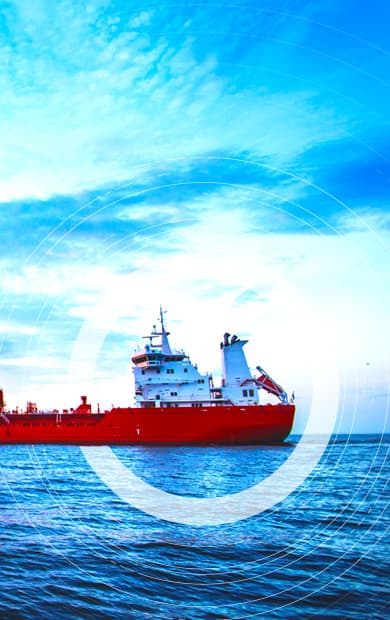
Oil, gas and dry cargoes are being shipped all over the world every day. With seaborne transportation comes exposure to shipping costs. Be it via direct cost or through the prices of feedstocks or finished products, a freight factor is always there. Highly sensitive to market shifts, geopolitics and regulations, freight is a complex and volatile part of every trade.
To manage this exposure, industry participants, from producers and traders to government agencies and financial institutions rely on our freight data for contracts, pricing formulas, analytics and arbitrage tracking.
Argus Freight consists of three dedicated services, covering trade flows for tankers, dry bulk and gas markets. Each service provides daily freight indexes, industry-specific news, market analysis and exclusive content. This enables you to connect the dots between commodity prices and shipping costs, giving you a complete view of the supply chain.
Latest freight news
To unearth the true insights needed to make confident decisions, you need access to data, price assessments and analytical tools to manage freight risks.
Hormuz Tuesday traffic steady at 17: Windward
Hormuz Tuesday traffic steady at 17: Windward
Houston, 30 September (Argus) — Vessel traffic through the strait of Hormuz on Tuesday was unchanged from the previous day, with 17 vessels transiting the strait despite heightened tensions, according to maritime security firm Windward. Of the 17 vessels six were inbound and eleven outbound. The inbound traffic was evenly split between Iran's preferred northern corridor and the southern, US-assisted route. Of the outbound vessels, five used the northern corridor, five used the southern route, and one transited the high-risk central route. Inbound vessel classes consisted of two tankers, two cargo ships, and two bulk carriers. The outbound vessel classes were six tankers and five cargo ships. Attacks on vessels transiting the strait continue, with three incidents reported on 30 September on tankers, according to the UK Maritime Trade Operations (UKMTO). A day earlier UKMTO reported that a Kuwaiti VLCC was struck by an unidentified projectile. The four attacks this week account for nearly 10pc of the 42 cumulative strikes recorded since early July. Vessel transits remain consistent at 13pc of the pre-war average of 135 daily transits. By Anjali Shenoy Send comments and request more information at feedback@argusmedia.com Copyright © 2026. Argus Media group . All rights reserved.
France to help protect Yanbu: Macron
France to help protect Yanbu: Macron
New York, 24 September (Argus) — French president Emmanuel Macron on Thursday said his country has finalized discussions with Saudi Arabia to send military assets to help protect the Red Sea port of Yanbu. "We will send military resources, soldiers, radars, defense systems, to protect this site," Macron said in an interview with French news channel TF1. France does not aim "to engage in conflict, but to protect this site." France and Saudi Arabia finalized discussions on the matter on Thursday, after Yemen's Houthi militants inflicted significant damage on the port, Macron said. Macron underscored the strategic importance of Yanbu, noting that "a few weeks ago more than 5mn b/d were coming out of it. That is not negligible." The Houthis claimed to have conducted fresh strikes on Thursday, targeting a Saudi Aramco facility in Yanbu and the Saudi capital of Riyadh. There has been no independent confirmation of the purported attacks. France's offer of military aid comes a week after the UK agreed to limited refueling support for Saudi Arabia. The US has yet to extend any support for Saudi Arabia in the wake of the attacks. President Donald Trump described the attack as a matter between the Saudis and the Houthis. "There's just one country that they're not too happy with," Trump said on 12 September, in the wake of the attack on the East-West Pipeline. "The Houthis called us, and they don't want to fight with us," he said. Macron continued to emphasize the need for dialogue with the Iranians and Omanis to reopen the strait of Hormuz through diplomatic means. By Charlotte Bawol Send comments and request more information at feedback@argusmedia.com Copyright © 2026. Argus Media group . All rights reserved.
Iran says war with US could spread to Indian Ocean
Iran says war with US could spread to Indian Ocean
Dubai, 24 September (Argus) — A new round of US attacks on Iran could see the conflict expand as far as the Indian Ocean, a senior military adviser to Iran's supreme leader warned on Thursday, amid renewed threats by US president Donald Trump to "annihilate" the country if diplomacy fails. "Our armed forces are wisely planning for multiple scenarios," said Major General Yahya Safavi, including a new round of US or Israeli attacks on Iranian territory. "So far, the war has spread from the [Mideast] Gulf and strait of Hormuz to the Red Sea and Bab el-Mandeb," Safavi said. "If there is a new phase, our response could expand [the conflict] even further. It could extend to the Indian Ocean, and perhaps other areas." He claimed Iranian intelligence has full visibility of US military movements in the region, spanning from the Mediterranean Sea to the Red Sea and Indian Ocean. Safavi's comments came less than two days after Trump issued a fresh threat against Iran's leadership while in New York for the UN General Assembly. "I have a big decision to make," Trump said. "Will a deal be made with Iran... or do I annihilate the Islamic Republic, and do it quickly, never giving them a chance to kill and destroy people and countries again." The rhetoric comes despite renewed attempts by the two sides to restart negotiations aimed at ending the almost seven-month war, reopening the strait of Hormuz to commercial shipping, and securing a deal on Iran's nuclear programme. Trump's son-in-law Jared Kushner and special envoy Steve Witkoff met indirectly with Iran's foreign minister Abbas Araghchi through a Qatari mediator in New York on Tuesday. Iranian foreign ministry spokesman Esmail Baqaei said Tehran had made clear its conditions for a return to diplomacy in its latest exchanges with Washington. These included "an end to US aggression", the lifting of the US naval blockade and sanctions on Iran, the release of Iranian frozen funds, and agreement on a framework for safe passage through the strait of Hormuz, to be determined by its two coastal states, Iran and Oman. Witkoff separately said he hoped the meeting would prove "constructive and promising". By Nader Itayim Send comments and request more information at feedback@argusmedia.com Copyright © 2026. Argus Media group . All rights reserved.
High costs belie US claim of opening Hormuz
High costs belie US claim of opening Hormuz
New York, 22 September (Argus) — President Donald Trump's administration has become increasingly confident it has eroded Iran's ability to constrict energy flows through the strait of Hormuz, but the high price of those efforts — both economically and militarily — is calling into question its long-term viability. "We now have more oil flowing through the strait than at any point by far since the conflict began," Trump told a group of Mideast Gulf diplomats assembled in New York on Tuesday to hear his vision for bringing the conflict with Iran to a swift conclusion. But Trump also told the group that progress on resolving the conflict can wait until after the 3 November US midterm elections, meaning more months of turmoil in what had been promised to be a short conflict. While crude prices have fallen this week, refined products prices — particularly diesel — are reaching record highs in many markets around the globe. The high costs to consumers has some countries considering more subsidies, and has even spurred the US administration to consider a ban on diesel exports . The US military is spending at least $3bn a month at the current rate of hostilities with Iran, the non-partisan Congressional Budget Office estimated last week. Most of the US efforts are going into enforcing a blockade on Iranian ports and extending protection to ships passing through the strait on the southern route near the coast of Oman. "The costs of sustaining US active defense of a southern export route are high, but many of those costs are obscured and shifted to the future," Joshua Tallis, research program director at the Center for Naval Analyses, told Argus on Tuesday. "Delayed maintenance, extended operating hours for ships and aircraft, higher use of reservists — these are all bills that will incur real costs for the military." But the US does not need to lift oil exports through Hormuz to pre-war levels to be able to claim success, said retired General David Petraeus, a former CIA director, at the Concordia Summit in New York on Tuesday. The US would only need to ramp up regional exports to around 16mn-17mn b/d — about 80pc of pre-war levels —due to demand destruction and alternative sources of crude such as the US and Venezuela, he said. The US' ability to prevail over Iran "... depends on whether or not we can facilitate the supply of crude out of the strait and the other bypasses to get the crude market back in balance," Petraeus said. US officials have in recent weeks been emphasizing the need to reduce reliance on Hormuz for energy exports, an idea challenged by countries in the Mideast Gulf, including Qatar . But following attacks that shut down the East-West pipeline, restricting exports from the Red Sea, Saudi Aramco is now expected to send at least 56mn bl of crude through the strait of Hormuz during September and October, increasing reliance on the waterway despite heightened security concerns. But even if more crude flows through the strait, the costs will remain high. The ongoing security risks and a limited pool of vessels available to transit Hormuz have pushed the rate for a very large crude carrier to move Middle Eastern crude through Hormuz to Asia to $34.31/bl on 18 September, its highest level since Argus began assessing the route in November 2016. By Charlotte Bawol Send comments and request more information at feedback@argusmedia.com Copyright © 2026. Argus Media group . All rights reserved.
Spotlight content
Browse the latest thought leadership produced by our global team of experts.


Explore our freight products
The Argus advantage

Our people
Our dedicated team of industry professionals are close to local markets, so you benefit not only from precise pricing data, but the breadth of market intelligence at their fingertips. Data alone - no matter how accurate - is not sufficient.

Methodologies
The unique market insights that our clients benefit from are founded upon proven methods. Our methodologies for price discovery are transparent and firmly based on rigorous market-appropriate processes.

Heritage
For over 50 years, clients have benefited from the precise market intelligence delivered by Argus experts working collaboratively across the global commodity markets.