

Financial Services
Overview
Financial services organisations choose Argus to anticipate price shifts, manage risk, and act with confidence in global commodity and energy markets.
We provide early insights by combining real-time intelligence, deep historical data, and forward-looking analysis – so you can move before the market does. Our independent benchmarks, built on rigorous methodologies, help reduce valuation risk and strengthen investment decisions.
At a glance
- Stay ahead of market moves
- Navigate volatility with confidence
- Make faster, smarter investment calls
- Protect portfolio value
Speak to a specialist
Register below and we will customise a solution that meets your exact needs. When you speak to one of our experts, you may be qualified to sample our industry-leading products on a no-cost basis.
Who we support
Market dynamics are at the core of financial institutions with exposure to energy and commodities, but the impact varies by function. Below, we outline how these pressures play out across finance teams and how Argus supports more confident decision‑making.
Corporate and investment banks
Institutional investors
How we can help
Engage with peers, network with boots-on-the-ground market participants and learn from analysts and experts to gain a full view on emerging risks, trends, and opportunities.
Commodities we cover
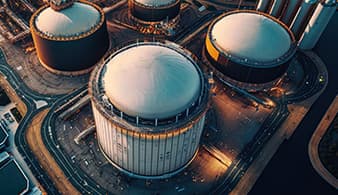
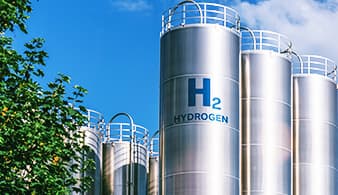
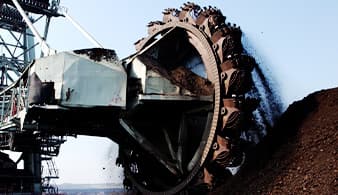
Coverage across global energy and commodity sectors, providing a coherent view of interconnected value chains.







Related events


Argus Methanol & Ammonia Conference
Argus Methanol & Ammonia Conference
Argus Biomass Asia Conference
Argus Biomass Asia Conference
Argus Biomass Conference
Argus Biomass Conference
Latest insights
Our team of 600+ commodity market experts keep you up-to-date on the energy and commodity markets as they evolve. Explore our latest complimentary written, audio and video content.
Luxembourg to add €50mn to global forest fund
Luxembourg to add €50mn to global forest fund
Sao Paulo, 8 June (Argus) — Luxembourg will join the Tropical Forests Forever Facility (TFFF), a fund to preserve global tropical forests launched by Brazil during the UN Cop 30 climate summit, Luxembourg's environment, climate and biodiversity minister Serge Wilmes said. It will contribute €50mn ($57.7mn) in the Tropical Forest Investment Fund (TFIF) — the TFFF's financial arm — from 2026-2030 through its Luxembourg's Climate and Energy fund. It also expects to maintain a long-term annual contribution to TFIF after 2030, but it did not specify the value nor length. TFFF aims to preserve tropical global forests and help pay developing countries $4/hectare (ha) for preserved tropical forests. The goal is to raise $125bn for the fund to protect 1bn ha (10mn km²) of tropical forests globally. Several countries backed TFF during Cop 30, such as Norway, Germany, Indonesia, France, Colombia, the Netherlands and Portugal. These countries, along with Brazil and Australia's Minderoo Foundation, had pledged a combined $6.7bn, according to Brazilian government officials. Norway's commitment to TFFF hinges on several conditions, such as that the fund mobilize at least NKr100bn ($10.55bn) by the end of 2026. The TFFF and other initiatives to combat deforestation, such as the Reducing Emissions from Deforestation and Forest Degradation (REDD+) framework, can generate a combined $9bn/yr to combat deforestation, Brazilian environment minister Marina Silva said in 2025. But the fund has been criticized by international environment groups for not addressing the impacts of agriculture, mining and hydrocarbon extraction in deforestation . By Mariana Funchal Send comments and request more information at feedback@argusmedia.com Copyright © 2026. Argus Media group . All rights reserved.
South Korea’s fundamental fuel economics and policy
South Korea’s fundamental fuel economics and policy
London, 8 June (Argus) — The dynamic between thermal coal and LNG in South Korea's energy mix is more relevant than ever in the wake of the Mideast Gulf war, with surging prices, supply disruptions and evolving government policy all dictating the shape of South Korea's electricity generation. Generation margin advantage Coal has maintained substantial cost advantages over gas-fired generation since the US/Israel-Iran war began. On 6 March, thermal coal generation costs in South Korea were estimated at 75.83 won/kWh, compared with W216.22/kWh for LNG. Argus' NAR 5,800 kcal/kg thermal coal assessment rose by $19/t to $115.63/t cfr South Korea on 6 March, while northeast Asia (ANEA) front-month spot LNG prices more than doubled over the same period to $23.665/mn Btu from $10.715/mn Btu . April: Full switching to coal In April, South Korea demonstrated substantial fuel switching away from gas to coal. South Korean coal burn averaged 15GW in April, up by 42pc from around 10.6GW in 2025. Gas generation was down by 6.2pc, equivalent to an LNG demand cut of approximately 110,000t. This marked the first full month without any Qatari LNG deliveries following the outbreak of the Middle East war. May-June: Persistent coal support, constrained gas burn Despite ongoing government efforts to preserve LNG stocks, coal's dominance continued. Gas-fired output fell to 15.9GW for the rolling four-week average over 27 April–24 May 2026, down by 4.4pc on the year, while coal-fired output rose by 16.5pc to about 15GW over the same period. However, at least six LNG cargoes were diverted to South Korea in May, signalling spot demand driven by summer temperatures. Structural constraints on fuel switching South Korea's ability to fuel-switch away from gas is constrained by persistent grid bottlenecks. New renewable, nuclear and coal-fired power plants in coastal areas lack sufficient grid capacity to transfer power to urban demand centres. This structural constraint has kept a higher floor for gas-fired output, particularly during off-peak hours. Coal's balancing role During the spring shoulder season (typically March–June), South Korea implements countermeasures forcing generators to run coal-fired units at minimum levels to maintain grid stability. Coal-fired plants require higher minimum stable output than gas-fired units, making them far less flexible when solar output spikes in the middle of the day. As a result, gas-fired plants have been relied on as the main balancing power source during peak renewable generation hours. Policy and energy transition The South Korean government previously pledged to phase out coal entirely by 2040 but shifted to a more flexible stance following Middle East energy disruptions. By 14 April, the government signalled the possibility of delaying its coal exit plan in response to the war in the Middle East, although it simultaneously reaffirmed its commitment to expand renewables to 100GW by 2030. Near-term outlook and summer 2026 demand South Korea is forecast to experience a hotter-than-normal summer in June–August, with its meteorological agency indicating over a 50pc chance of above-average temperatures. This could increase power demand and LNG requirements. But the country faces tighter structural supply dynamics. Nuclear availability is scheduled to fall to 19.4GW in June–August from 20.1GW a year earlier, assuming the Wolsong reactors under maintenance stay off line. Coal-fired capacity will gradually return from maintenance, with 4.7GW set to have returned by the end of May, but this will only partially offset the government's ability to switch away from gas. Gas tariff and electricity price pressures are likely to persist, encouraging continued reliance on coal where operationally feasible. S Korea 40% coal switching price S Korea 44, 40% DS, 58% SS Send comments and request more information at feedback@argusmedia.com Copyright © 2026. Argus Media group . All rights reserved.
Israel hit Karoon petrochemical hub in southwest Iran
Israel hit Karoon petrochemical hub in southwest Iran
Dubai, 8 June (Argus) — Israel struck a number of facilities at a petrochemical complex in Mahshahr, in Iran's southwestern Khuzestan province, as part of a temporary resumption in direct hostilities between Tehran and Jerusalem. Israel's strikes were in response to a barrage of ballistic missiles that Iran launched at targets in northern Israel late on Sunday, 7 June, which in turn, were a reaction to Israeli strikes on the Lebanese capital, Beirut, earlier that day. Israel's Defense Forces (IDF) said it targeted "several infrastructure sites" it said were used by Tehran "to produce and export raw materials for weapons production." The facilities "produced unique materials that serve as critical components for the development of ballistic missiles," it said. The IDF said it had targeted the same complex during the initial weeks of the conflict that began on 28 February. Iran confirmed the hit, naming the complex as Karoon Petrochemical, which is owned by Iranian petrochemical company PGPIC. It and several of its subsidiaries were sanctioned by the US in 2019 on the grounds it would help finance the Islamic Revolutionary Guard Corps (IRGC). The IDF separately said it struck several Iranian "strategic defense systems" Tehran had deployed across the country to replace systems destroyed earlier in the fighting. Iran reported strikes on facilities in and around Tehran, Isfahan and Tabriz. Iran's armed forces said Israel had "started a dangerous game" with its targeting of the Karoon petrochemical hub, and vowed to hit back hard. It subsequently said the IRGC had launched a new missile strike against "similar industries" in Israel's Haifa, home to Israel's largest integrated oil refining and petrochemical facility. The 197,000 b/d Haifa refinery was targeted by Iran during the 12-day war in 2025, and during the early weeks of the current conflict . Israel has not confirmed if the facility sustained any damage today. The IRGC has said it has suspended its attacks on Israel, but warned "any continuation of [Israeli] hostilities and wrongdoing ꟷ particularly in southern Lebanon ꟷ will be met with far harsher and more devastating actions than those previously taken." By Nader Itayim Send comments and request more information at feedback@argusmedia.com Copyright © 2026. Argus Media group . All rights reserved.
Iran says suspends military operation against Israel
Iran says suspends military operation against Israel
London, 8 June (Argus) — Iran has suspended its attacks on Israel, state media said today citing the Islamic Revolutionary Guard Corps (IRGC). Crude prices pared some earlier gains. The IRGC said it has suspended military operations that saw ballistic missiles fired at targets in northern Israel. This was Iran's first attack on Israel since 8 April, and promoted retaliatory airstrikes by Israel on what it said were military targets in western and central Iran. "Any continuation of [Israeli] hostilities and wrongdoing — particularly in southern Lebanon — will be met with far harsher and more devastating actions than those previously taken," the IRGC said according to state news agency IRNA. Tehran deems Israeli military action in Lebanon as a part of the wider war involving the two countries and the US, and has said it wants an end to Jerusalem's incursions as part of any deal that could reopen the strait of Hormuz. Israel and Lebanon's central government have reached several ceasefire agreements, with the US facilitating those talks. But Lebanon's central government has little control over Hezbollah, the Iran-backed militant group that has been attacking civilian and military targets in northern Israel. Earlier on Monday, US president Donald Trump appealed for calm. "Israel and Iran must immediately stop "shooting"," he wrote on his Truth Social account. He again said a peace deal is close, "subject to ignorance or stupidity getting in its way", and said the US naval blockade of Iranian shipping in the Gulf of Oman "will remain in place and in full force and effect", until a deal is reached. The front-month August Ice Brent contract fell back from earlier highs after the Iranian announcement, to trade up by around 1pc on the day at $94.13/bl as of 11:50 GMT. It hit an intraday high of above $98/bl earlier in the day. By Ben Winkley Send comments and request more information at feedback@argusmedia.com Copyright © 2026. Argus Media group . All rights reserved.


